Gypsum vs POP false ceiling: which is best for your home?
Gypsum board and POP (plaster of Paris) are the two most common false ceiling materials in Chennai homes, with PVC used in bathrooms and balconies. They look similar once painted but differ in how they are built, how long they take and how they cope with humidity. This guide helps you pick the right one for each room.
Updated Reviewed by Sajjan Sunderrajan, Founder
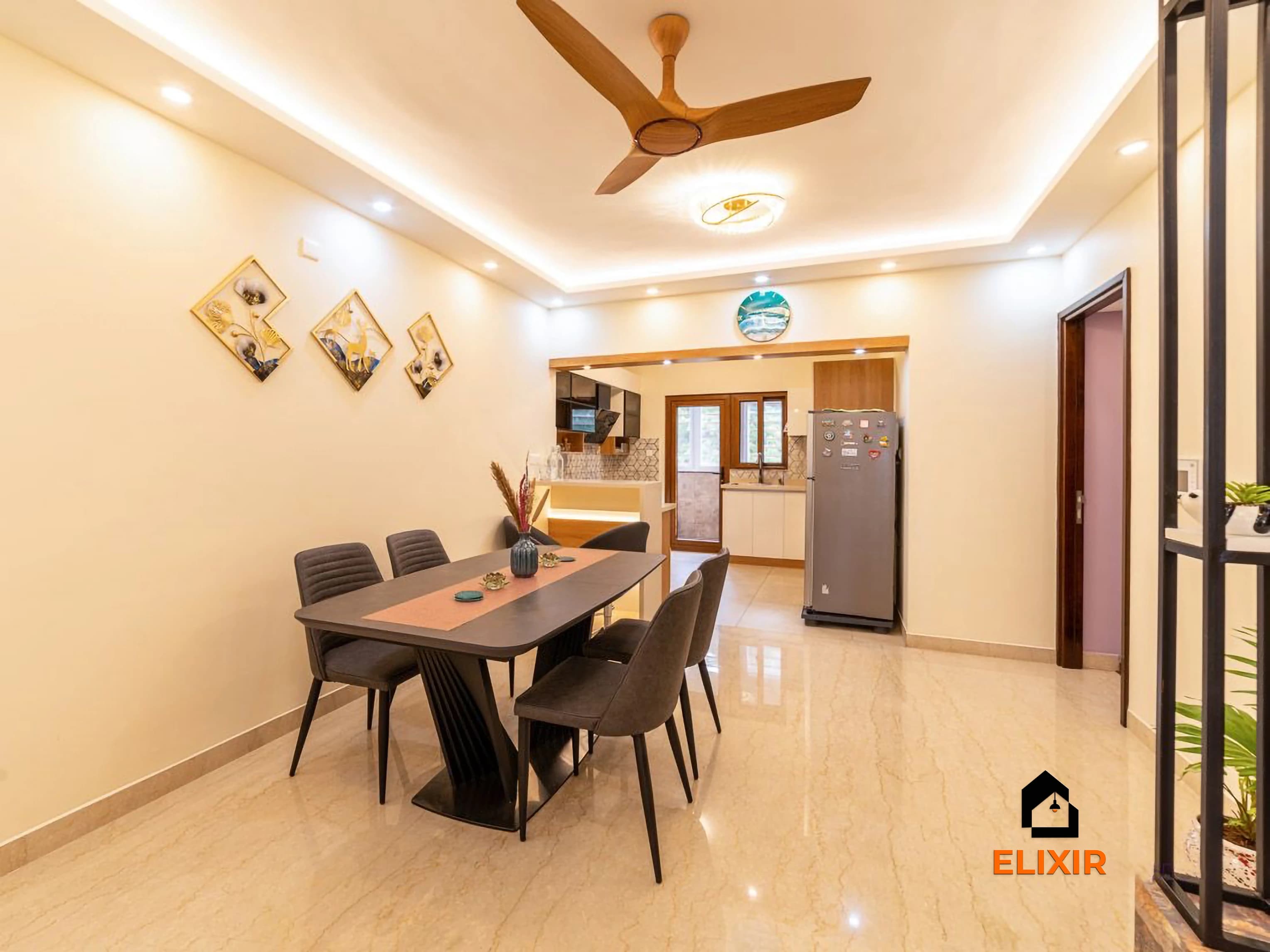
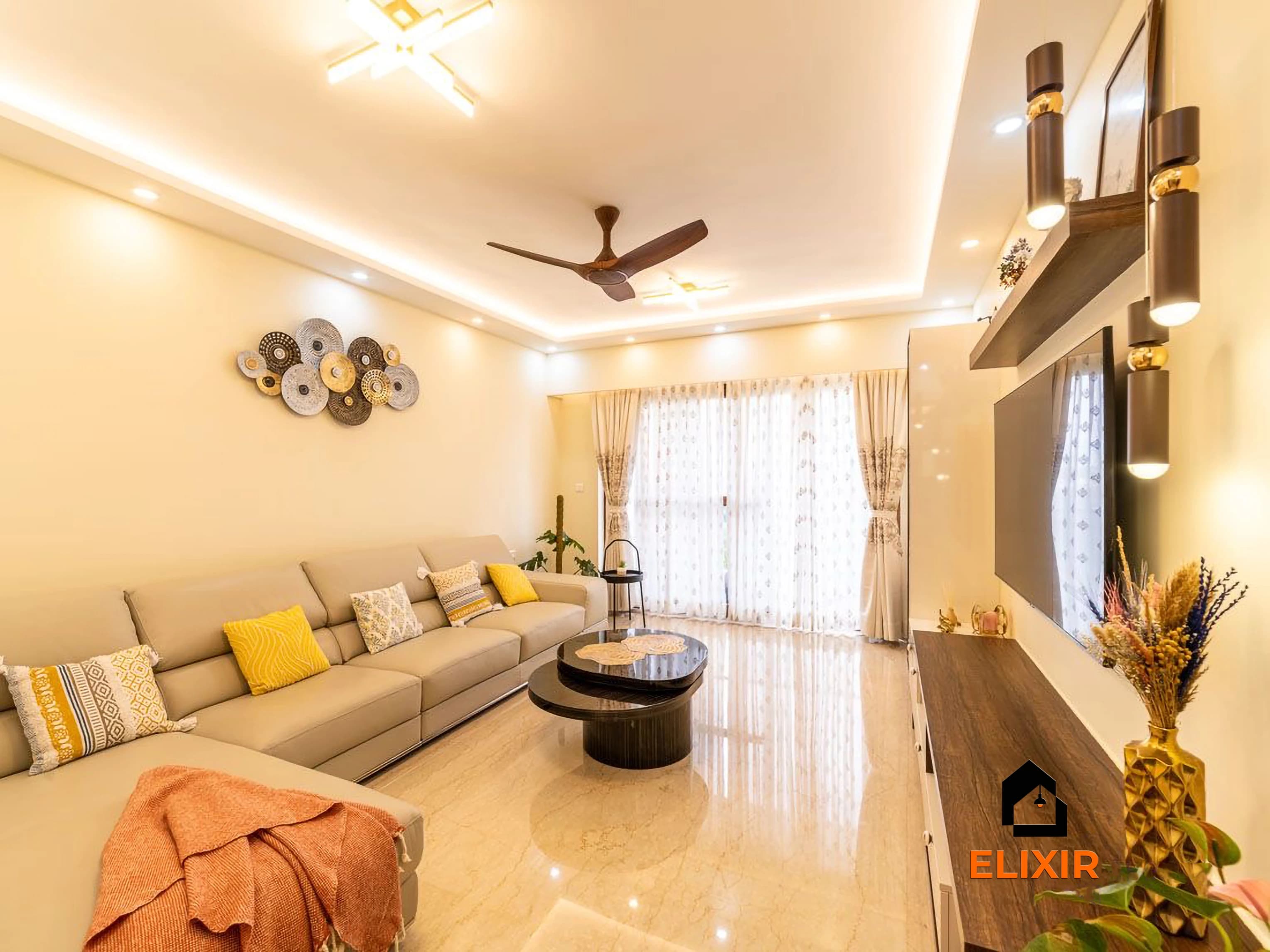
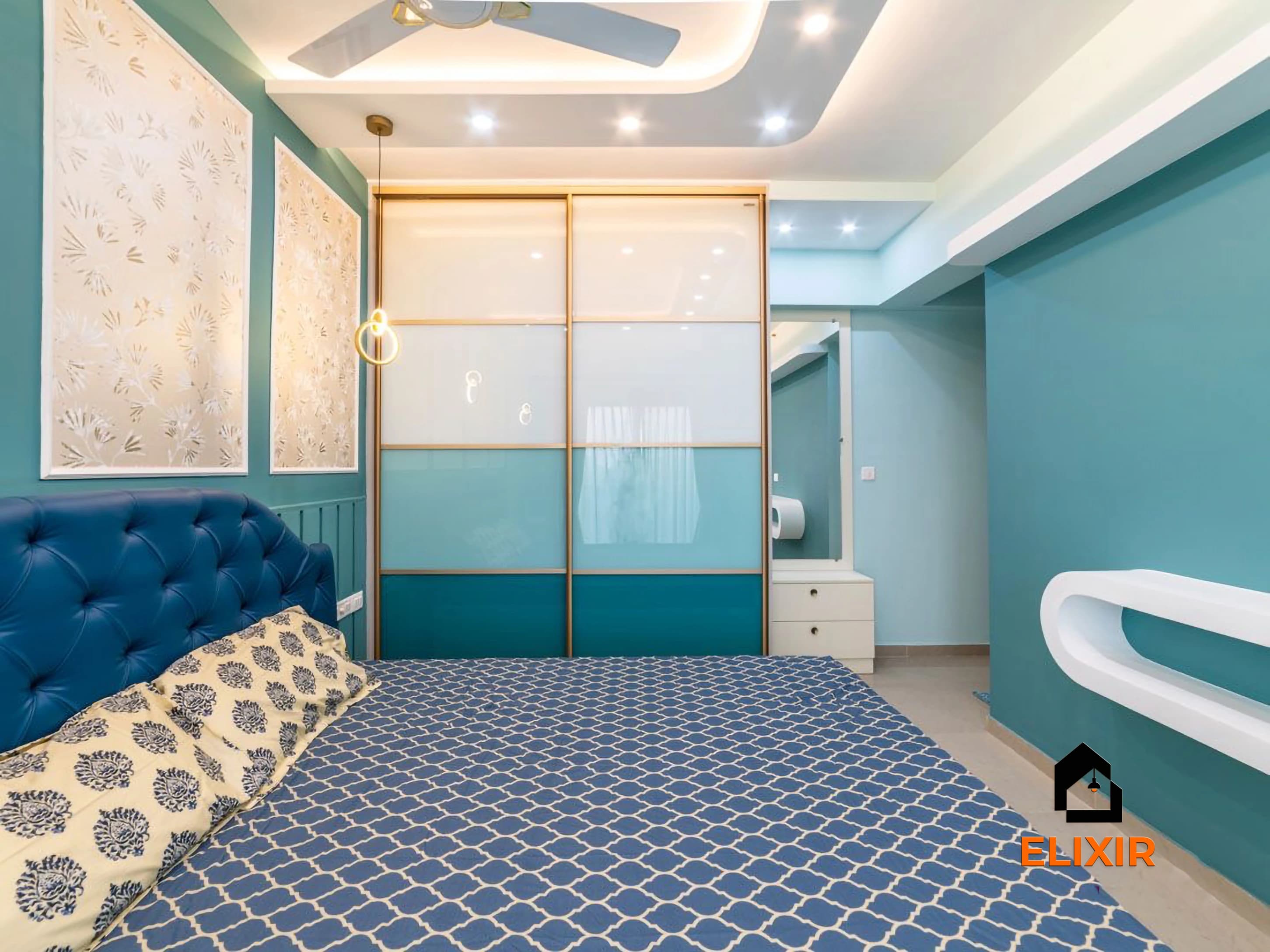
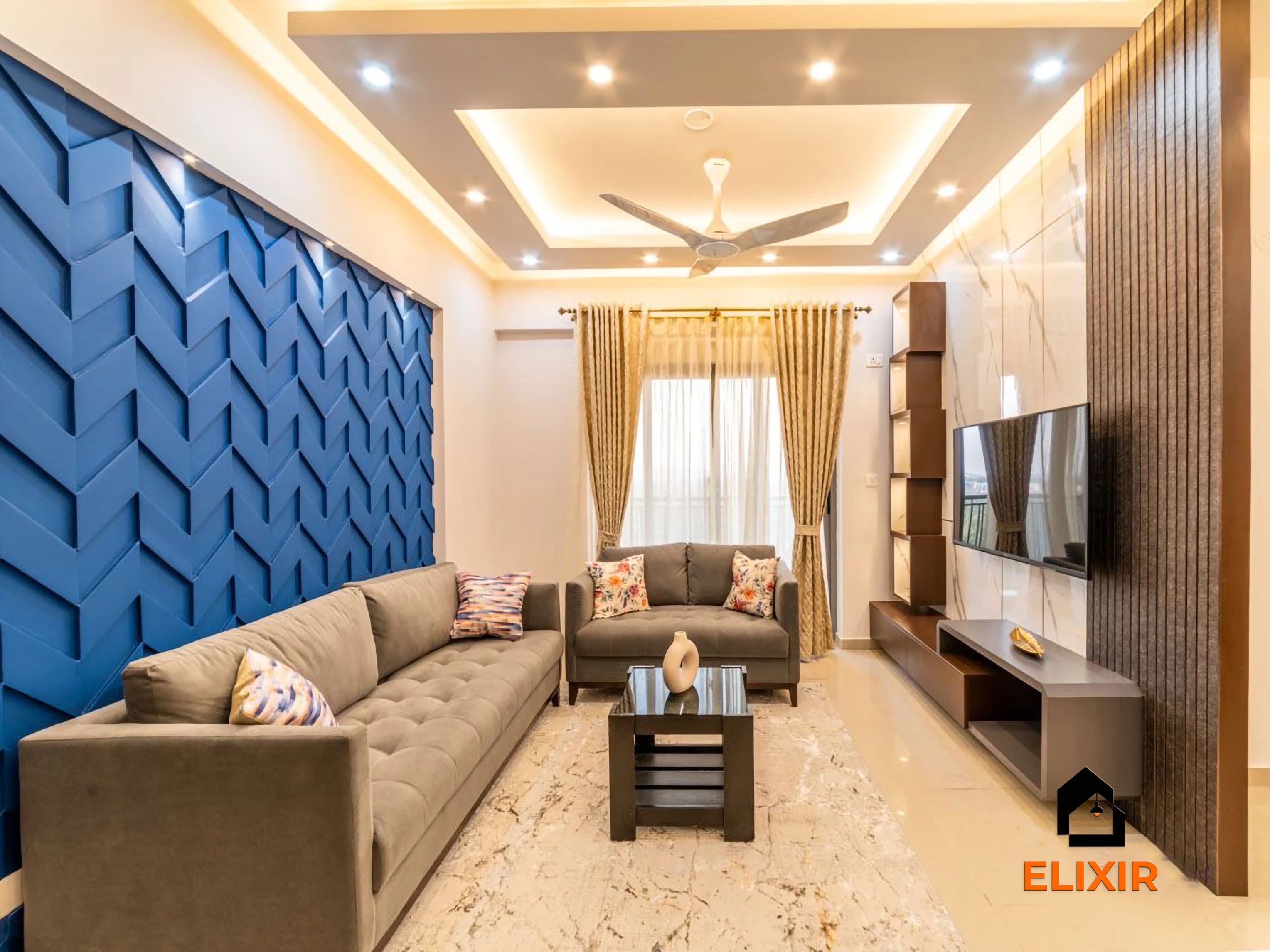
An Elixir home in Perungudi, Chennai
Quick answer
Which is better, gypsum or POP false ceiling?
For most Chennai homes, gypsum board is the better choice. It installs faster, is cleaner on site, gives a smoother finish and cracks less when joints are taped properly. POP suits curved or highly detailed designs and can cost slightly less in labour. In bathrooms and balconies, use PVC or moisture-resistant boards instead.
Key takeaways
Gypsum board ceilings are factory-made sheets fixed to a metal frame; POP is plaster applied wet on site.
Gypsum is faster and cleaner, usually finishing a room in a few days instead of a week or more.
POP is easier to shape into curves and mouldings, but needs skilled workers to avoid cracks.
Neither standard gypsum nor POP should be used in bathrooms; choose PVC or moisture-resistant board there.
Plan lights, AC ducts and fan points before the ceiling is closed to avoid cutting it later.
Most hairline cracks come from poor joint taping or a weak frame, not from the material itself.
The short version
Which should you choose?
Choose this if
Gypsum board ceiling
You want a clean, flat or stepped ceiling with cove lighting in living rooms and bedrooms
You are living in the home and want less dust and a shorter time on site
You want consistent quality that depends less on individual worker skill
You may need to open a panel later for wiring or AC servicing
Choose this if
POP ceiling
Your design has curves, domes, arches or detailed mouldings
You are doing a full renovation where on-site wet work is already happening
You have access to an experienced POP team and time for curing
Choose this if
PVC panel ceiling
The ceiling is in a bathroom, utility area or open balcony
You need a waterproof, low-maintenance surface rather than a painted finish
Budget is tight and the area is small
Gypsum vs POP vs PVC false ceiling
Approximate comparison for a typical living room or bedroom ceiling in a Chennai apartment.
Factor
Gypsum board
POP
PVC panels
How it is made
Ready-made boards screwed to a GI metal frame
Plaster mixed and applied wet on a mesh or frame
Interlocking plastic panels on a frame
Approximate cost
Moderate; similar to POP for plain ceilings
Slightly lower labour for simple work, higher for detailed designs
Lowest for small wet areas
Time on site
Usually 3–6 days per room including finishing
Often 7–12 days including drying and curing
1–2 days for a bathroom
Dust and mess
Low to moderate
High; wet work and sanding
Low
Finish quality
Smooth and consistent with good joint taping
Very smooth in skilled hands, varies otherwise
Visible panel joints, plastic look
Curves and detailing
Possible but limited
Best option for curves and mouldings
Not suitable
Humidity and moisture
Standard board fine indoors; use MR board near kitchens
Can absorb moisture and crack if damp
Waterproof
Cracks over time
Rare if joints are taped and frame is sound
More common if mix or curing is poor
Rare
Repairs and access
Panels can be cut and patched neatly
Patching is harder to blend
Panels pop out and refit
Best rooms
Living, dining, bedrooms
Feature ceilings, renovations
Bathrooms, balconies, utility
Costs and timelines are approximate and depend on ceiling area, design, lighting and site height.
Why a false ceiling at all?
A false ceiling hides beams, wiring and AC piping, and gives you a place for cove lights, spotlights and curtain pelmets. In many Chennai apartments, the slab has uneven beams that make a room feel lower than it is. A well-planned ceiling evens this out and lets you light the room in layers instead of relying on a single tube light.
It also helps with heat. A ceiling with an air gap under a top-floor slab reduces the heat reaching the room in summer. The trade-off is height: most designs take 100–200 mm, so rooms under 2,750 mm (about 9 ft) should use a peripheral design rather than a full drop.
A gypsum ceiling starts with a galvanised iron (GI) frame fixed to the slab and walls. Factory-made gypsum boards, usually 12.5 mm thick, are screwed to this frame. Joints between boards are filled, taped and finished with jointing compound, then the whole ceiling is primed and painted.
Because the boards are uniform, the quality depends mainly on the frame spacing and joint finishing. A good team fixes the frame at the right intervals, staggers board joints and uses paper or mesh tape on every seam. Skipping the tape is the most common reason gypsum ceilings show hairline cracks within a year or two.
GI channels at regular spacing, levelled with a laser
12.5 mm gypsum board; moisture-resistant (MR) board near kitchens
Every joint taped and finished before priming
Cut-outs for lights and AC grilles marked before boarding
POP is a powder that is mixed with water and applied to a mesh or frame, then shaped and smoothed by hand. Because it is applied wet, it can follow curves, form domes and take moulded patterns that boards cannot. Experienced POP workers can produce very fine finishes.
The downside is that quality depends heavily on the team. The mix ratio, layer thickness and curing time all affect strength. POP also needs time to dry fully before painting, which is slower in Chennai's humid months. Expect more dust and wet mess during the work, which is harder to manage in an occupied home.
Gypsum quality depends on the frame and taping. POP quality depends on the hands of the worker.
Humidity, monsoons and cracks in Chennai
Chennai's humidity affects both materials, but in different ways. Standard gypsum board is fine in living rooms and bedrooms with normal ventilation, but should be swapped for moisture-resistant board near kitchens. POP absorbs moisture more readily, so leaks from the slab above or a poorly sealed AC drain can lead to staining and cracks.
Before any ceiling goes up, check the slab for seepage, especially on top floors and below bathrooms. Fix leaks first and allow the slab to dry. A ceiling that covers an active leak will fail regardless of material, and repairs will cost more once lights and paint are in place.
Check the slab for damp patches after rain
Use MR gypsum near kitchens and in coastal areas like ECR and Besant Nagar
Route AC drain pipes with a proper slope outside the ceiling
Bathrooms, balconies and utility areas
Neither standard gypsum nor POP belongs in a bathroom. Steam from showers and constant humidity will cause sagging, peeling paint and mould. For bathrooms, PVC panels or moisture-resistant boards with a waterproof paint are the practical choices, and they let you access the plumbing above without breaking anything.
Open balconies and utility areas face rain and direct humidity too. PVC or exterior-grade cement boards suit these spaces. They are not as refined as a painted gypsum ceiling, but they last far longer in wet conditions and cost little to replace if damaged.
Designs that suit each material
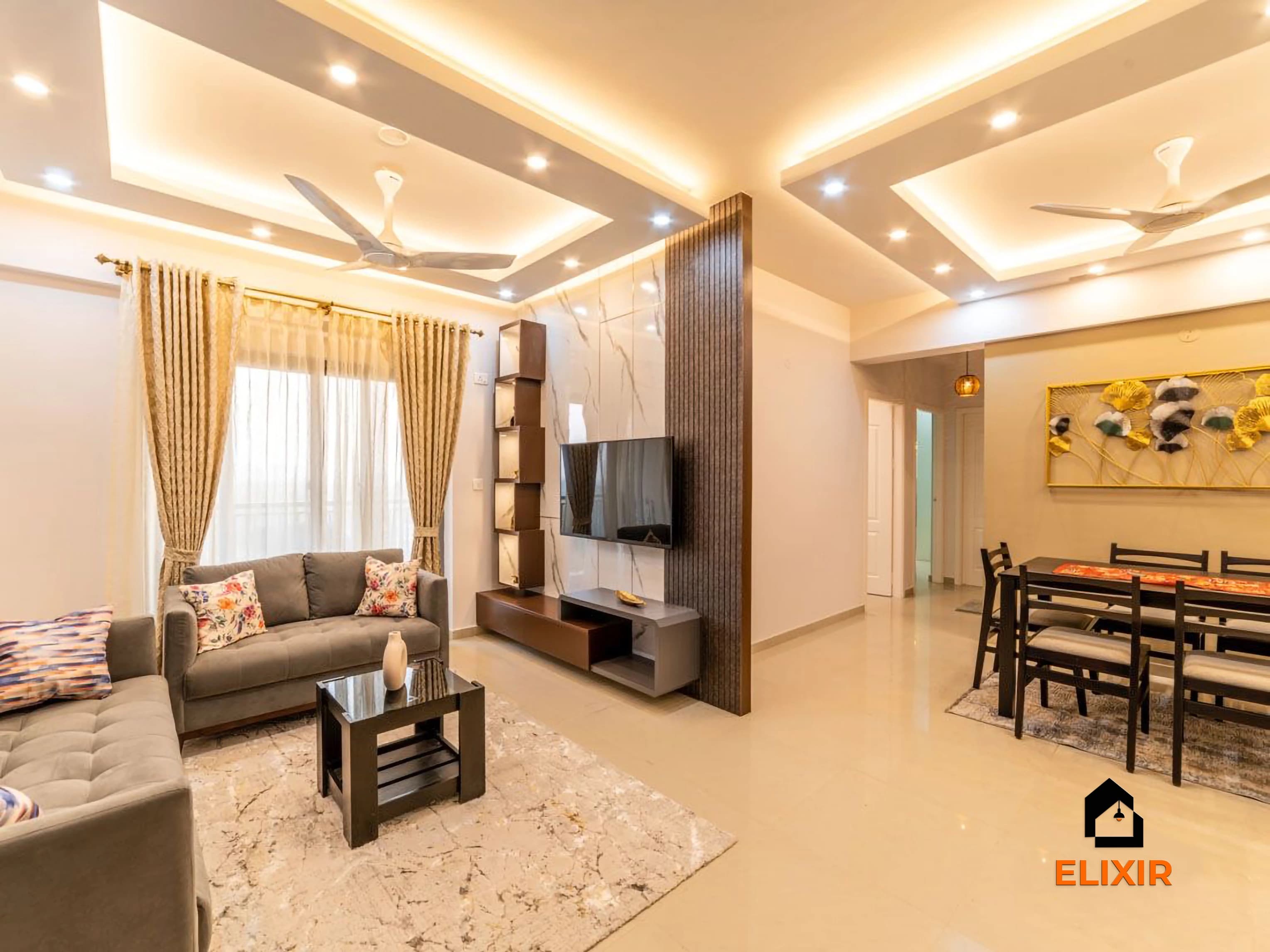
Peripheral ceilings, where a border drops around the room and the centre stays at slab height, are the most popular choice in Chennai flats. They hold cove lights and curtain pelmets without lowering the whole room. Gypsum handles these, along with stepped and floating designs, very well.
If you want a circular dome over a dining table, curved edges or ornamental mouldings, POP is the natural choice. Many homes combine the two: gypsum for the main frame and POP for small curved or decorative details. Keep feature ceilings for one or two spaces, such as the living room, and use simpler designs elsewhere.
Plan every light point, fan hook, AC unit position and curtain track before the ceiling frame goes up. Fans should be fixed to the slab with a down rod, not to the ceiling board. For cove lighting, fix the cove depth and LED strip type early, since changing them later means cutting the finished ceiling.
Spotlights should be placed using the furniture layout, not a uniform grid. A spotlight over a sofa back or wardrobe shutter looks out of place. Ask for a reflected ceiling plan showing every fixture, and approve it alongside the 3D design.
Fan hooks anchored to the slab, not the board
Separate circuits for cove, spot and main lights
Access panel near AC indoor units and junction boxes
False ceilings are priced per square foot of ceiling area, with extra charges for cove profiles, curves and light cut-outs. Plain gypsum and plain POP ceilings usually cost in a similar range. Detailed POP work and multi-level gypsum designs cost more because they take longer.
The ceiling itself is often only part of the total. Lights, LED strips, drivers, wiring and painting add significantly. When comparing quotes, check whether board brand and thickness, frame type, joint taping, primer, paint coats and electrical work are all included. Our interior design cost guide shows how ceilings fit into a full home budget.
Compare ceiling quotes on frame type, board brand, joint finishing and painting, not just the rate per square foot.
Talk to a real designer
Numbers are a starting point. A designer gets you the real one.
Every home is different. A 20-minute conversation with one of our designers usually narrows the range a lot, and often finds savings you wouldn't spot on your own. It's free and there's no obligation.
Still unsure? Our designers are happy to answer anything on a call.
Which is better for a living room, gypsum or POP?
For most living rooms, gypsum board is the better choice. It installs faster, creates less mess and gives a consistent flat finish for cove lighting and spotlights. Choose POP only if you want curves, domes or ornamental mouldings that boards cannot easily create.
Does a gypsum false ceiling crack?
Hairline cracks can appear if the GI frame is weak, spaced too widely, or if joints between boards are not taped properly. With a sound frame, staggered joints and proper taping, a gypsum ceiling rarely cracks. Leaks from the slab above are the other common cause, so fix seepage first.
Is POP ceiling cheaper than gypsum?
For plain ceilings, the two usually cost in a similar range. POP labour can be slightly cheaper for simple work, but detailed POP designs cost more because they take longer. Gypsum often saves money overall in occupied homes because the work is faster and needs less cleaning.
Can I use a false ceiling in the kitchen?
Yes, but use moisture-resistant gypsum board and keep it away from direct steam over the hob. Make sure the chimney duct is routed and sealed before the ceiling closes. Many homeowners keep kitchen ceilings simple and add only under-cabinet lighting.
What false ceiling is best for bathrooms?
PVC panels or moisture-resistant boards are best for bathrooms. Standard gypsum and POP absorb moisture and will sag or peel. PVC is waterproof, easy to clean and lets you remove panels to reach plumbing or the exhaust fan without damage.
How long does a false ceiling take to install?
A gypsum ceiling in a typical bedroom or living room takes roughly three to six days including finishing and primer. POP usually takes longer, around seven to twelve days, because it must dry and cure. Painting and light fitting add a few more days.
How much height does a false ceiling reduce?
Most false ceilings drop 100–200 mm from the slab, depending on cove lighting and AC ducting. In rooms with a slab height below about 2,750 mm, a peripheral ceiling that drops only around the edges keeps the centre of the room at full height.
Is a false ceiling safe for ceiling fans?
Yes, if the fan is hung from a hook fixed into the concrete slab using a down rod that passes through the ceiling. A fan should never be fixed directly to gypsum board or POP, as the vibration will crack the ceiling and the board cannot carry the load.
Does a false ceiling keep the room cooler?
It helps, especially on top floors. The air gap between the slab and ceiling slows heat transfer from a hot roof. It also reduces the volume of air your AC has to cool. The effect is moderate, so roof insulation or reflective paint on the terrace still matters.
Can I install a false ceiling in an occupied home?
Yes, and gypsum is the easier choice for occupied homes because it creates less wet mess and dust than POP. Cover furniture, plan the work room by room, and agree on daily clean-up with the team. Expect some noise when the frame is drilled into the slab.