Sliding vs hinged wardrobe: which is right for your bedroom?
The choice between sliding and hinged shutters affects how your bedroom feels every day, from walking space to how easily you reach your clothes. Neither is better in every room. This guide compares them on space, cost, hardware, maintenance and safety so you can decide room by room.
Updated Reviewed by Sajjan Sunderrajan, Founder
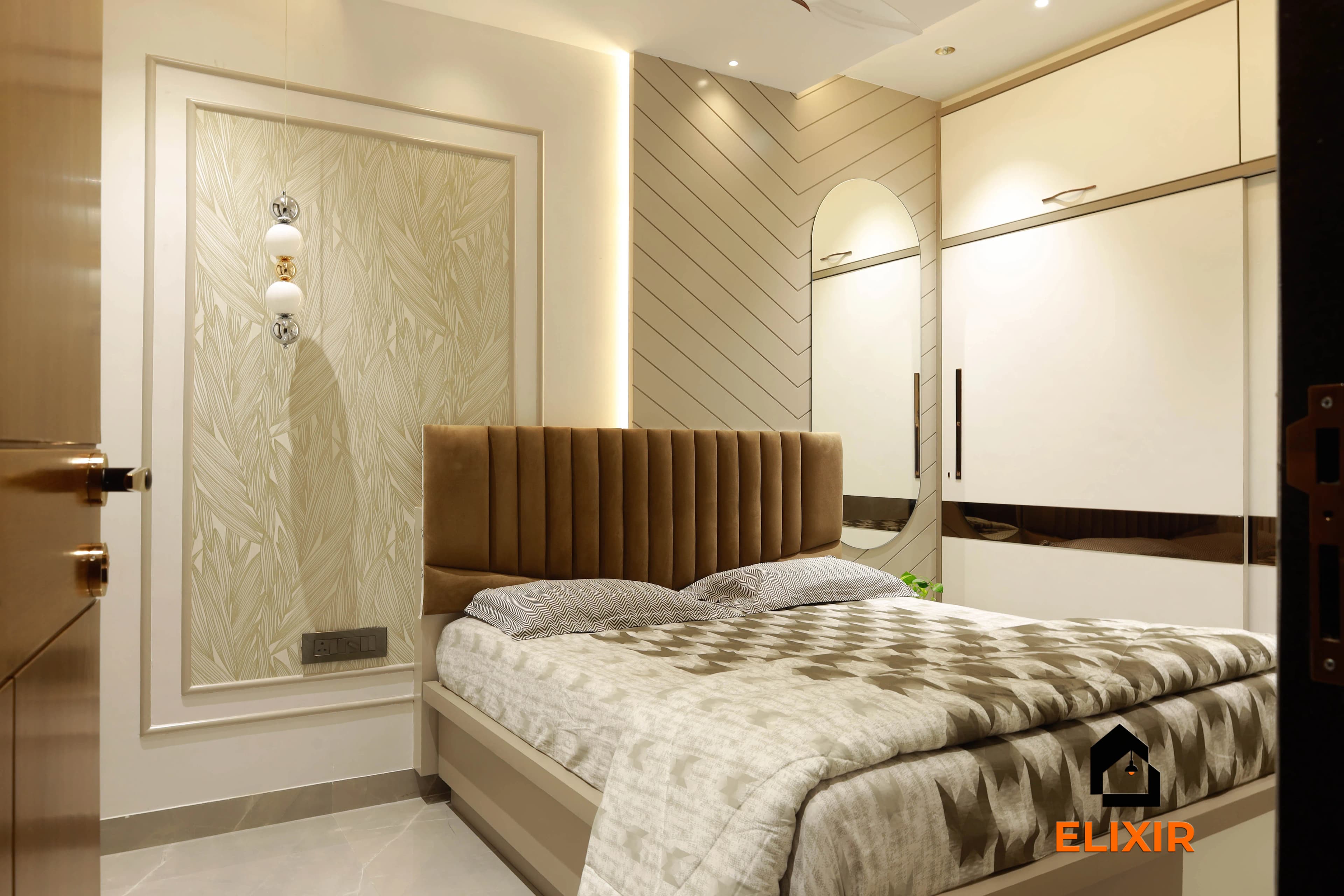
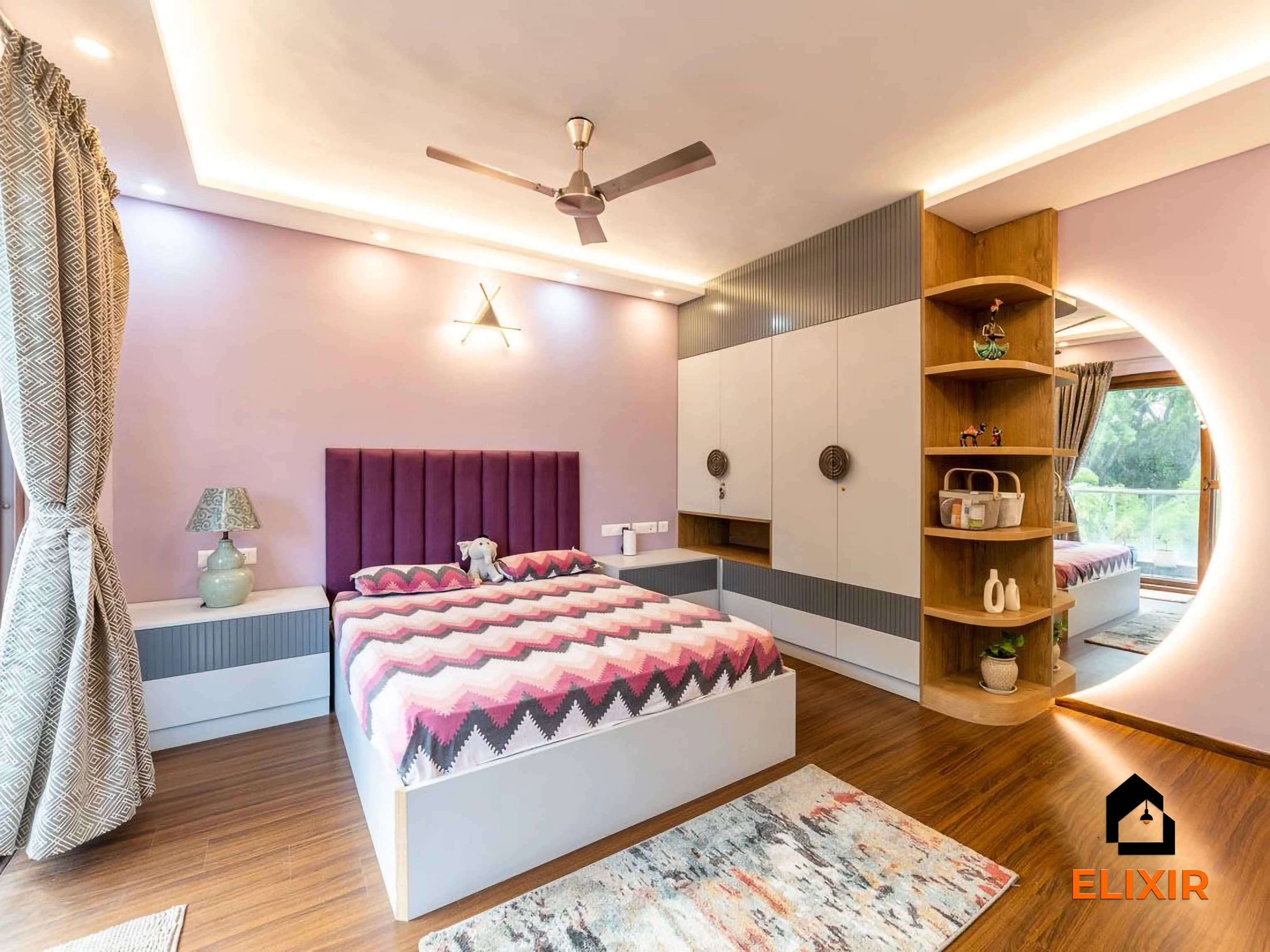
An Elixir home in Nungambakkam, Chennai
Quick answer
Which is better, a sliding or hinged wardrobe?
Choose a sliding wardrobe when the space in front is under about 900 mm or the bed sits close to it, since shutters need no swing room. Choose hinged when space allows, budget is tighter, or you want to see the whole wardrobe at once. Hinged costs less and is simpler to repair; sliding saves floor space.
Key takeaways
Sliding wardrobes need no swing space, making them useful in compact Chennai bedrooms.
Hinged wardrobes usually cost less and let you open the full width at once.
Sliding systems rely on track hardware quality; cheap tracks are the main cause of complaints.
Sliding wardrobes need about 100 mm more depth for the track and overlapping shutters.
Dust settles in bottom tracks, so sliding wardrobes need regular cleaning in Chennai.
For kids' rooms, soft-close hinged shutters or soft-close sliding systems both work; avoid heavy glass.
The short version
Which should you choose?
Choose this if
Sliding wardrobe
There is less than about 900 mm between the wardrobe and the bed or wall
The wardrobe is wide (2,100 mm or more) and you want fewer, larger shutters
You want full-length mirror or glass shutters as part of the room design
You are willing to pay for good-quality track and roller hardware
Choose this if
Hinged wardrobe
There is enough clear floor space for shutters to swing open fully
You want to see and reach the entire wardrobe at once
Budget matters and you want easier, cheaper repairs over time
The wardrobe is narrow, has lofts above, or has an irregular shape
Sliding vs hinged wardrobe at a glance
Approximate comparison for a 6–8 ft floor-to-loft wardrobe in a Chennai apartment bedroom.
Factor
Sliding wardrobe
Hinged wardrobe
Floor space needed in front
Minimal; shutters stay within the wardrobe line
About 450–600 mm for shutters to swing
Wardrobe depth
About 650 mm including track
About 550–600 mm
Approximate cost
Usually 15–30% higher, mainly due to track hardware
Lower for the same size and finish
Access
Only one section open at a time
Full width open at once
Hardware life
Depends on track and roller quality; cheap systems wear quickly
Soft-close hinges are durable and cheap to replace
Full-length mirror or lacquered glass shutters work well
Mirror usually limited to one shutter
Kids' rooms
Soft-close tracks needed; heavy glass shutters not ideal
Soft-close hinges safe and simple
Repairs
Track or roller issues may need a technician
Hinge alignment can be done with a screwdriver
Best for
Compact rooms, wide walls, modern designs
Spacious rooms, tight budgets, irregular walls
Costs are approximate and vary with size, board, finish and hardware brand.
Start with the room, not the catalogue
Before choosing a shutter type, measure the clear distance between the wardrobe wall and the bed or opposite wall. Hinged shutters on a standard 450–600 mm module need that much room to open, plus space for you to stand. If the bed is closer than about 900 mm, hinged shutters will hit it or leave you squeezing sideways.
Also note where doors, windows, AC units and switchboards sit. A sliding shutter that blocks a switchboard half the time, or a hinged shutter that clashes with the room door, is an everyday annoyance. A measured site plan settles these questions before any design is drawn.
Measure wardrobe wall length and slab or loft height
Measure clear space between wardrobe and bed
Mark door swings, windows, AC and switch positions
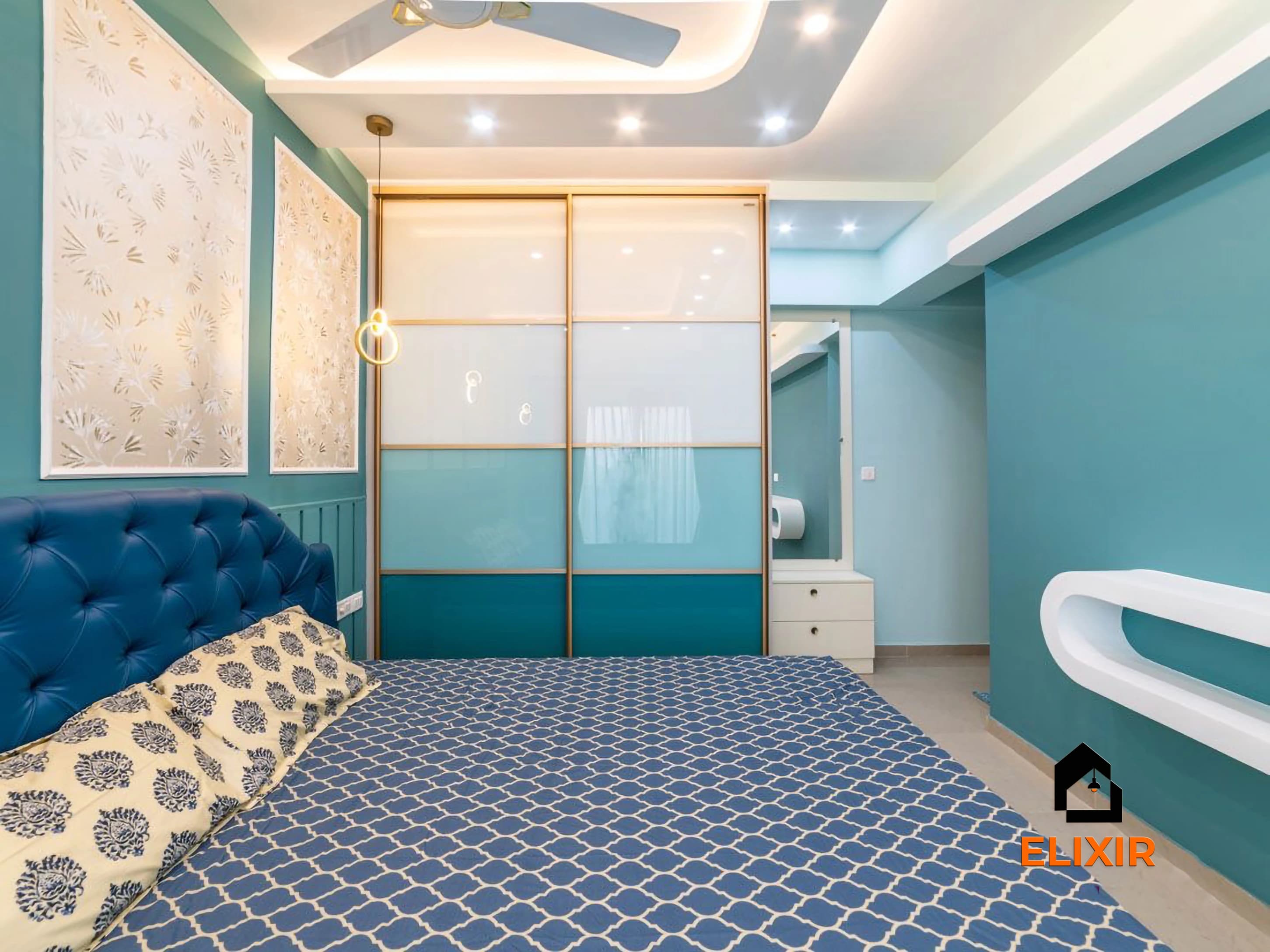
A sliding wardrobe uses two or three large shutters running on top and bottom tracks, with rollers carrying the weight. The shutters overlap, so only part of the wardrobe is open at any time. Because they do not swing, they keep the bedroom floor clear.
The hardware is where sliding wardrobes succeed or fail. A good system has smooth, quiet rollers, soft-close dampers at both ends and an anti-jump guard that keeps shutters on the track. Low-cost systems often feel fine at handover but start sticking or derailing within a couple of years, especially with heavy mirror or glass shutters.
With a sliding wardrobe, you are mainly paying for the track. Do not let it be the first thing cut to reduce the quote.
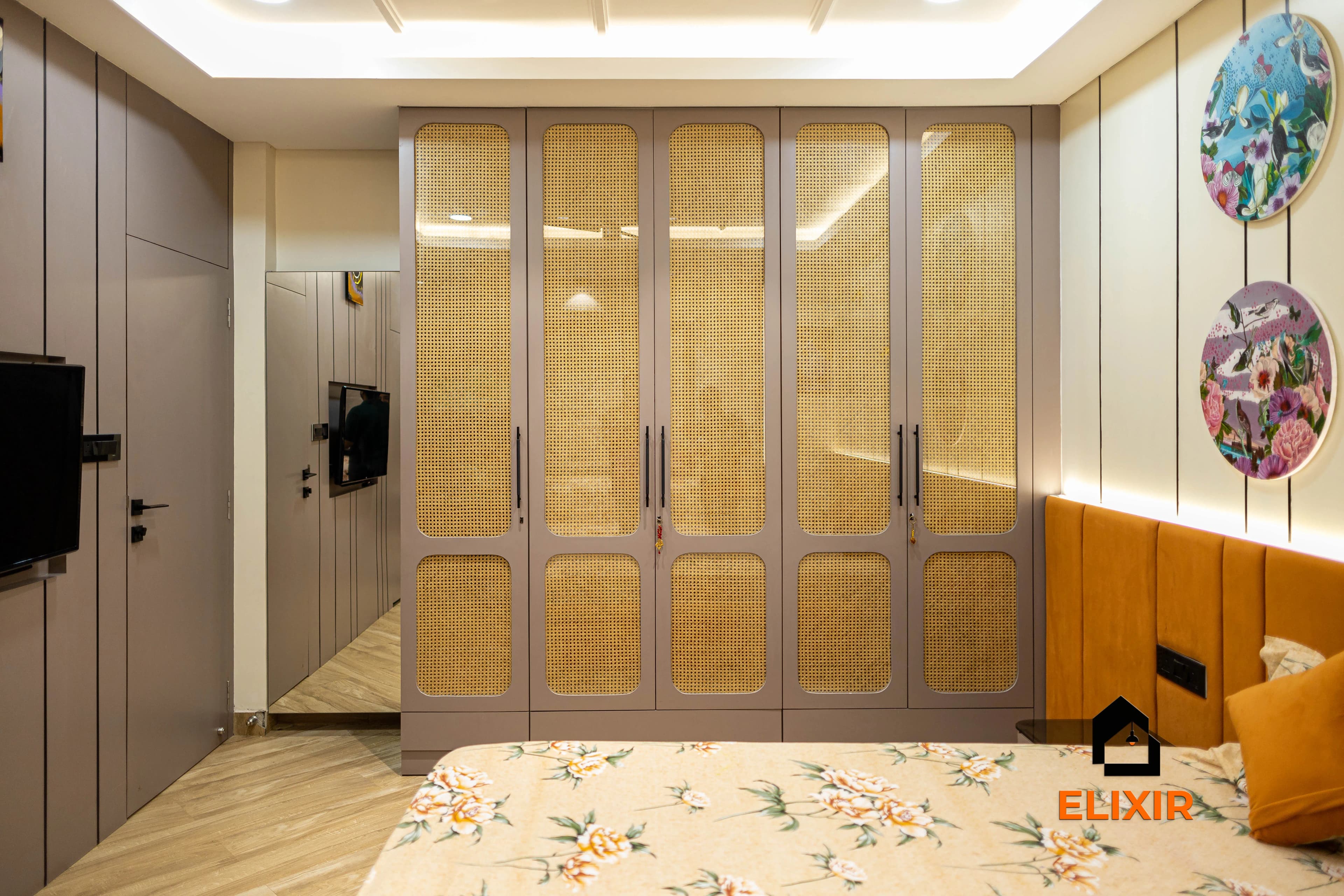
Hinged wardrobes use individual shutters, typically 450–600 mm wide, each on two or three concealed hinges. Soft-close hinges are now standard and stop shutters from banging. You can open one shutter or the whole wardrobe, so finding clothes is quick.
They are also more forgiving. Hinges are inexpensive, widely available and adjustable with a screwdriver if a shutter sags. Hinged designs suit wardrobes with lofts, corners or uneven walls, since each shutter can be sized individually. The main cost is floor space in front of the wardrobe.
Chennai, Chennai
Cost differences explained
For the same size, board and finish, a sliding wardrobe usually costs roughly 15–30% more than a hinged one. Most of the difference is the track system, plus the extra depth and stronger shutters needed for large sliding panels. Mirror or lacquered glass shutters increase the gap further.
Hinged wardrobes can also rise in cost if you choose premium finishes like acrylic or PU on every shutter. For a fair comparison, ask for both options priced on the same board, finish and internal layout. Our wardrobe cost guide shows current approximate ranges for Chennai homes.
Sliding: track system, wider shutters, extra depth
Hinged: more hinges, more shutter edges to finish
Same internal fittings cost the same in both
Dust, humidity and maintenance in Chennai
Chennai's dust settles quickly in bottom tracks, and sand from open windows near the coast makes it worse. If the track is not cleaned regularly, rollers start grinding and shutters become heavy to move. A top-hung sliding system with a minimal bottom guide reduces this problem.
Humidity affects both types. Choose moisture-resistant board, seal all edges and avoid placing wardrobes against walls with seepage. For hinged wardrobes, use hinges with an anti-corrosion finish. For sliding wardrobes, aluminium tracks resist rust better than painted steel.
Vacuum sliding tracks every few weeks
Keep silica gel or moisture absorbers inside during monsoons
Check exterior walls for damp before fixing wardrobes
Mirrors, glass and finishes
Sliding wardrobes are the natural choice for a full-length mirror shutter, which also makes a small bedroom feel larger. Lacquered glass and fluted glass shutters suit sliding systems too. These shutters are heavy, so the track must be rated for the weight.
Hinged wardrobes can have a mirror on one shutter or inside a door. Laminate, acrylic, PU and veneer finishes work on both types. In children's rooms, matte laminate is practical because it hides fingerprints and survives knocks better than high-gloss finishes.
In children's rooms, the main concerns are fingers and heavy shutters. Soft-close hinges slow the shutter before it closes, while good sliding systems have soft-close dampers at both ends. Avoid heavy mirror or glass sliding shutters for young children, and choose rounded edges on handles.
For elderly parents, hinged shutters are often easier because they open fully and need little force. Sliding shutters can be heavy to push if they are large or mirrored. In either case, keep frequently used clothes between waist and shoulder height and use pull-down rods for higher sections.
Shutters get attention, but the internal layout decides how useful the wardrobe is. Plan long and short hanging, shelves for folded clothes, drawers, a locker, and space for sarees, suitcases and bed linen. Lofts above the wardrobe are useful for seasonal storage in Chennai homes.
Sliding wardrobes need internal drawers to sit behind the shutter line so they do not hit the overlapping panels. Hinged wardrobes avoid this issue. Whichever you pick, review the internal elevation drawing during design and make sure each section matches what you actually own.
Long hanging for sarees and dresses
Short hanging for shirts and trousers
Drawers set back from sliding shutter tracks
Loft for suitcases and seasonal items
Chennai, Chennai
Talk to a real designer
Numbers are a starting point. A designer gets you the real one.
Every home is different. A 20-minute conversation with one of our designers usually narrows the range a lot, and often finds savings you wouldn't spot on your own. It's free and there's no obligation.
Still unsure? Our designers are happy to answer anything on a call.
Is a sliding wardrobe better than a hinged one?
Neither is better everywhere. Sliding wardrobes save floor space and suit compact bedrooms or wide walls. Hinged wardrobes cost less, give full access and are easier to repair. Measure the space in front of the wardrobe first: under about 900 mm usually points to sliding.
How much more does a sliding wardrobe cost?
As an approximate guide, a sliding wardrobe costs roughly 15–30% more than a hinged one of the same size and finish. The difference comes from the track system, wider shutters and extra depth. Mirror or glass shutters add more. Compare both options on the same board and finish.
How long do sliding wardrobe tracks last?
Good-quality aluminium tracks with sealed rollers can last many years with basic cleaning. Low-cost systems may start sticking or derailing within a couple of years. Ask for the track brand and weight rating in your quote, and keep the bottom track free of dust.
What depth should a sliding wardrobe be?
A sliding wardrobe typically needs around 650 mm of depth, compared with about 550–600 mm for a hinged one. The extra space allows for the track and the overlapping shutters while keeping enough depth for hangers. Check the room layout can spare that extra depth.
Are sliding wardrobes good for small bedrooms?
Yes. In small bedrooms where the bed sits close to the wardrobe, sliding shutters avoid clashes and keep the walkway clear. A full-length mirror shutter can also make the room feel larger. Just ensure there is still enough depth for the track.
Which wardrobe is better for a kids' room?
Both work if you choose soft-close hardware. Hinged wardrobes with soft-close hinges are simple and safe. Sliding wardrobes should have soft-close dampers at both ends and lighter shutters. Avoid heavy glass or mirror sliding shutters for young children.
Can I add a mirror to a hinged wardrobe?
Yes. A mirror can be fixed to one shutter or fitted on the inside of a door. A full-length mirror across the whole wardrobe is easier with sliding shutters, but a single mirrored hinged shutter is often enough for daily use.
How do I maintain a sliding wardrobe in Chennai?
Vacuum the bottom track every few weeks, wipe the rollers, and check that the shutters are aligned. During the monsoon, keep moisture absorbers inside. If a shutter starts sticking, call for an adjustment early rather than forcing it, which can damage the rollers.
Which board is best for wardrobes in Chennai?
MR-grade plywood or HDHMR board with sealed edges suits most bedrooms. For wardrobes on exterior walls or near bathrooms, BWP plywood is safer. The shutter finish, whether laminate, acrylic or veneer, should match how much wear the wardrobe will get.
Can I mix sliding and hinged wardrobes in one home?
Yes, and many homes do. A compact second bedroom might get a sliding wardrobe, while the master bedroom with more space uses hinged shutters. Keeping the finishes consistent makes the home feel planned even when the shutter types differ.