Search for the best interior designers in Chennai and you will find hundreds of names with similar photos and promises. The difference shows up in the details: how they quote, how they supervise and what they put in writing. This guide gives you the questions and checks that separate a reliable team from a risky one.
Updated Reviewed by Sajjan Sunderrajan, Founder
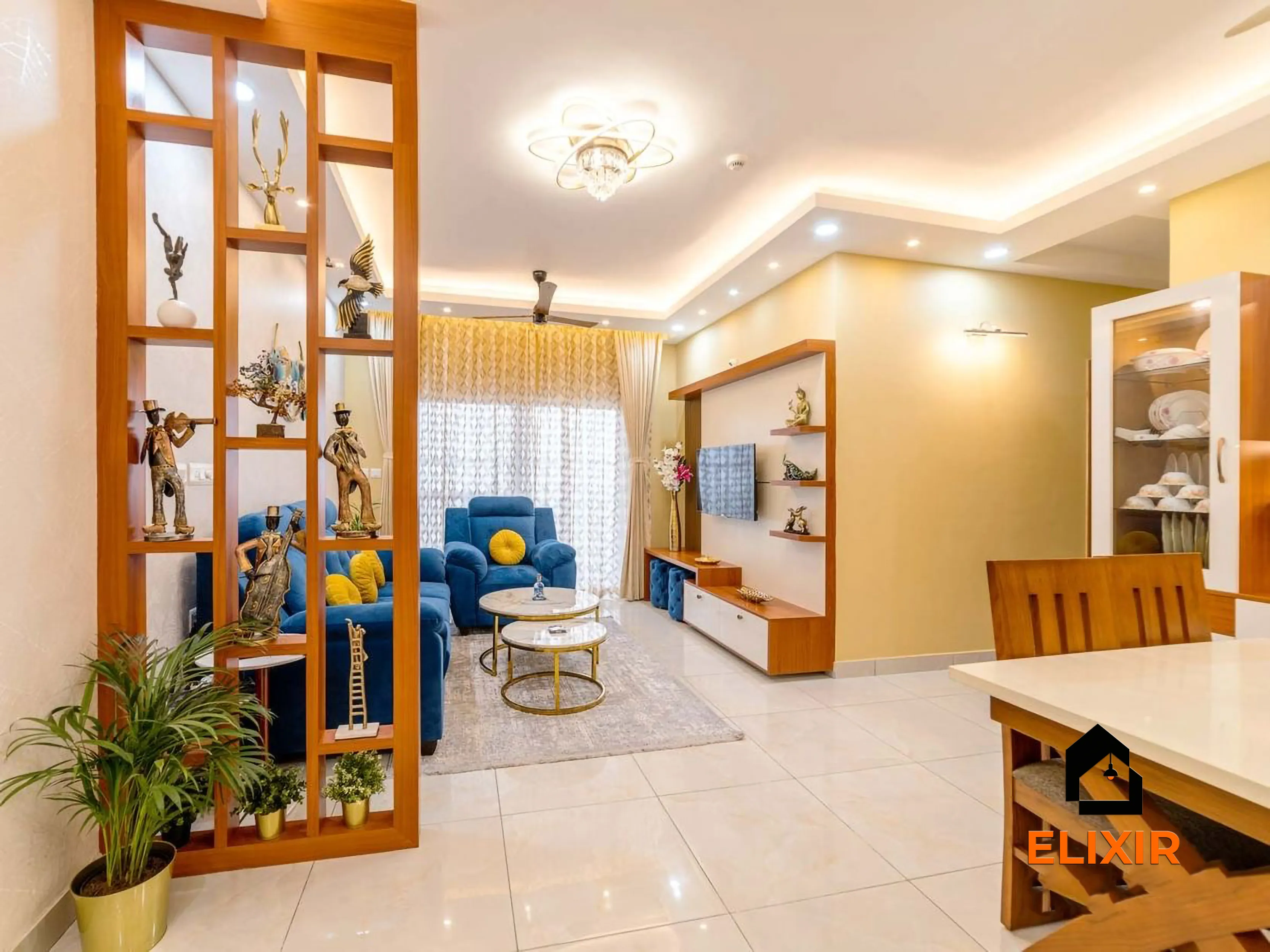
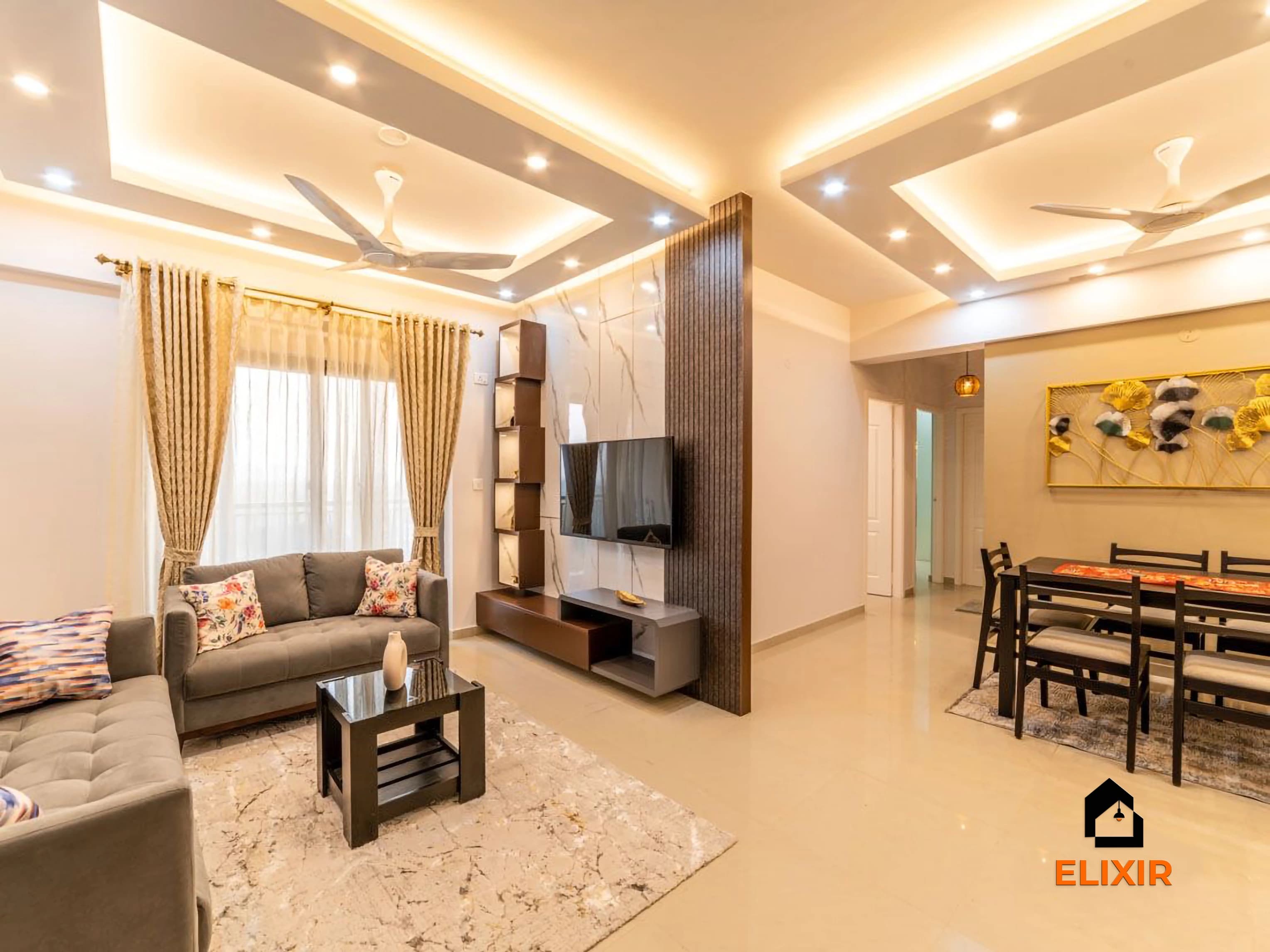
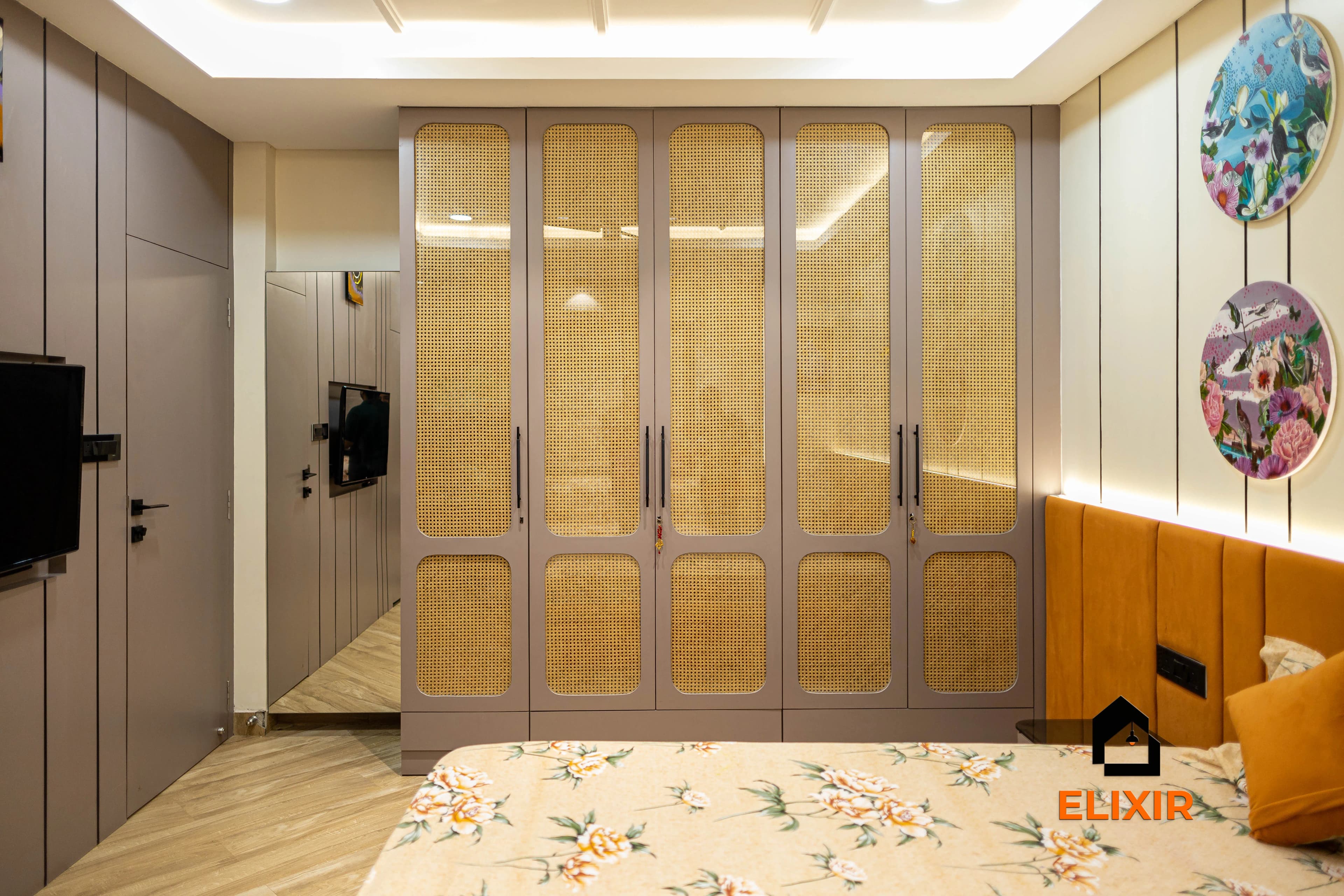
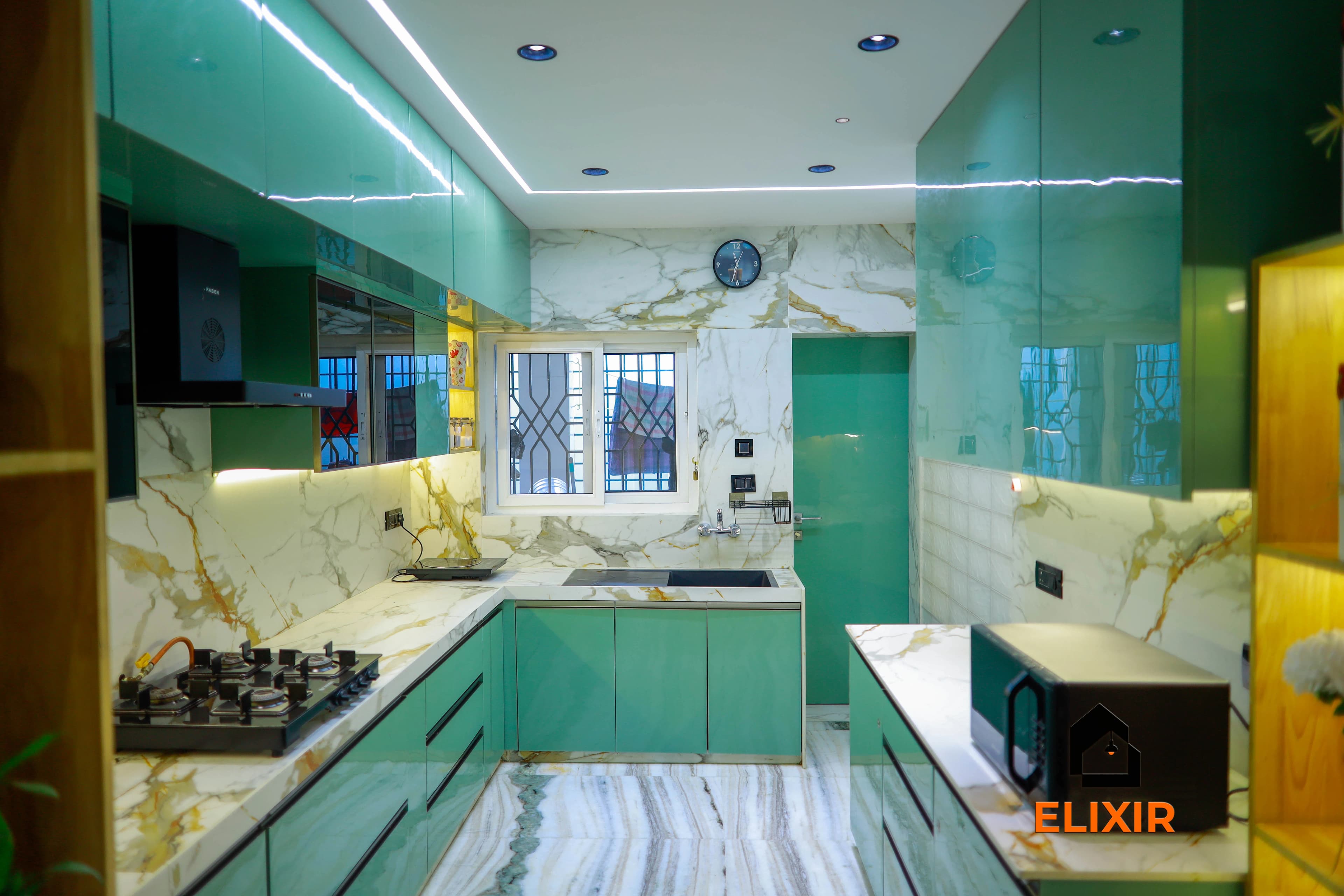
An Elixir home in T Nagar, Chennai
Quick answer
How do I choose a good interior designer in Chennai?
Shortlist three firms, visit at least one completed home of each, and compare itemised BOQs listing board brand, finish and hardware for every item. Check the payment schedule is tied to milestones, the warranty is written, and a named supervisor manages your site. Avoid lump-sum quotes and large advances before design sign-off.
Key takeaways
Compare at least three itemised quotes built on the same scope, not lump-sum figures.
Visit a completed home and, if possible, a site under construction.
Insist on a BOQ naming board grade, finish, hardware brand and dimensions for each item.
Payments should follow milestones, with only a modest booking amount before design sign-off.
Get the warranty, timeline and change-order process in the written contract.
Ask who will supervise your site day to day, and how often you will get updates.
Independent designer vs carpenter vs design-and-build company
Each route can work. The right one depends on your time, budget and appetite for coordinating work yourself.
Factor
Independent designer
Carpenter / contractor
Design-and-build company
Design
Strong, often custom; execution handled by others
Basic or copied from references
In-house designers with 3D views
Execution
You or the designer hire separate contractors
Built on site by the same team
Factory production plus installation team
Pricing
Design fee plus separate execution costs
Usually lowest upfront
Package or itemised pricing covering design and execution
Quality control
Depends on contractors chosen
Depends on individual skill
Factory machining and set processes
Single point of contact
Partly; coordination can fall on you
Yes, but limited design input
Yes, design to handover
Timeline predictability
Varies with multiple parties
Often slips with on-site work
Generally more predictable
Warranty
Rare on execution
Usually informal or verbal
Written warranty is common
Best for
Unique homes and owners with time to manage
Small, simple jobs on a tight budget
Full-home projects with a fixed move-in date
These are general patterns; individual firms vary. Judge each option on its documents and completed work.
Decide your scope and budget first
Before you speak to any designer, write down what you need: full home, or only kitchen and wardrobes; which rooms matter most; and a realistic budget range. Without this, every firm will quote a different scope, and you cannot compare them fairly.
Use an online calculator or a cost guide to get a rough number for your home size, then share that range openly. Good designers will tell you what fits within it and what does not. Firms that avoid discussing budget until late in the process often add costs once you are committed.
List rooms in order of priority
Note must-have items such as a tall pantry or study unit
Set an approximate budget range, including a 10% buffer
What to check in a portfolio
Photos on websites and social media show the best angles under ideal lighting. Look for projects similar to yours in size and budget, ideally in Chennai apartments like yours. Ask how many homes the firm completes in a year and whether the photos are of their own work.
Pay attention to details: shutter alignment, edge finishing, gaps between panels, and how lights are placed. Rendered 3D images are useful for design discussions, but they are not proof of execution. Ask to see photographs of completed sites along with the original 3D designs to check how closely they match.
A bill of quantities (BOQ) should list every item with dimensions, board type and grade, shutter finish, edge banding, hardware brand and unit rate. This is the only way to know what you are paying for and to compare firms fairly.
Be careful with quotes that use vague terms like 'premium ply' or 'branded hardware' without names, or that quote a single lump sum for a room. Watch for items marked 'as per site' with no estimated range, missing exclusions, and very low per-square-foot rates that leave out shutters, internals or installation.
No board grade or brand named (for example, BWP vs MR)
Hardware listed as 'standard' with no brand
Lump-sum figures without dimensions
No list of exclusions such as civil, electrical or painting
Unclear GST treatment
If two quotes differ by a lot, the cheaper one usually leaves something out. A BOQ shows you what.
Payment schedule norms
A fair payment schedule ties money to visible progress. A common pattern is a small booking amount for design, a larger payment on design sign-off before production starts, a payment when materials reach site, and a final payment after installation and snag fixing.
Be cautious of firms asking for most of the project value upfront, before you have approved final drawings. Keep the final instalment meaningful, so the team has a reason to complete snag work promptly. Every payment should come with a receipt that references the contract.
Booking: small amount for design work
Design sign-off: moves the project into production
Material delivery: on arrival at site
Handover: after installation and snag list are closed
Warranty terms worth reading
A warranty is only useful if it is written and specific. Check what it covers (carcass, shutters, hardware, finishes), for how long, and what it excludes. Many warranties exclude water damage, which matters in Chennai kitchens and bathrooms, so ask how moisture-related issues are handled.
Find out how claims work: who you call, how quickly a technician visits, and whether parts and labour are both covered. Hardware brands often have their own warranties, which should be passed on to you. At Elixir, for example, our 12-year warranty is part of the written agreement for every project.
Site supervision and communication
Most problems in interior projects come from poor coordination on site: measurements that change, electricians and carpenters working out of order, or materials arriving late. Ask who will be your single point of contact and how often a supervisor visits the site.
Agree on how updates will be shared, such as weekly photos on WhatsApp and a short call at each milestone. If you live away from Chennai or work long hours, this matters even more. A firm with a clear process should explain it without hesitation.
Timelines depend on design approval speed, factory production, site readiness and civil work. For factory-made modular interiors, production commonly takes 15–20 working days after design sign-off, followed by installation. A full-home project then needs time for ceilings, electrical work, painting and cleaning.
Be wary of promises that skip steps, and ask what happens if the timeline slips. A reliable firm will give you a dated schedule and explain the dependencies, such as when you need to finalise appliances or when the builder must hand over keys. Some firms, including Elixir, offer a 45-day move-in promise for full-home projects with clear conditions.
A realistic schedule names the dates you must approve things by, not just the date the firm will finish.
Contract clauses to insist on
Your contract should include the final BOQ and drawings, the payment schedule, the project timeline, warranty terms, and the process for changes. Change orders should be written and priced before work starts on them, so the final bill does not surprise you.
Also check clauses on delays (from either side), cancellation, material substitution, and site cleaning and debris removal. If the firm uses subcontractors for civil or electrical work, the contract should say who is responsible for their quality.
Signed drawings and BOQ attached
Milestone-based payment schedule
Dated timeline with dependencies
Written change-order process
Warranty scope and claim process
Material substitution only with your approval
Visit a completed home before you sign
A site visit tells you more than any portfolio. Ask to see a completed home similar to yours, and if possible, speak to the owner without the firm present. Open drawers and shutters, look at edges and inside cabinets, and check how the kitchen has held up after some months of use.
If you can, also visit an ongoing site. It shows how tidy and organised the team is, how materials are stored and whether work follows drawings. Taking an hour for these visits can save months of frustration later.
Open every type of drawer and shutter
Check inside edges and back panels
Ask the owner about timeline and after-sales service
Numbers are a starting point. A designer gets you the real one.
Every home is different. A 20-minute conversation with one of our designers usually narrows the range a lot, and often finds savings you wouldn't spot on your own. It's free and there's no obligation.
Still unsure? Our designers are happy to answer anything on a call.
How do I find the best interior designer in Chennai?
Shortlist three firms that have completed homes similar to yours, ideally in your area. Compare itemised quotes on the same scope, visit at least one completed site per firm, and read the contract, warranty and payment schedule carefully. The best choice is the one whose documents and completed work match their promises.
How much does an interior designer charge in Chennai?
Independent designers often charge a design fee, while design-and-build firms usually include design in the overall project cost. Full-home interiors are typically quoted by room or by package. Use our interior design cost guide for approximate ranges by home size before comparing quotes.
How many quotes should I get?
Three is a good number. Fewer gives you little to compare, and many more becomes hard to manage. Make sure each firm quotes the same scope, ideally using your own room list, so differences in price reflect materials and workmanship rather than missing items.
What should be in an interior design BOQ?
Each item should have its dimensions, board type and grade, shutter finish, edge banding, hardware brand, quantity and unit rate. The BOQ should also list exclusions such as civil work, electrical, painting and appliances, and state how GST is applied.
How much advance should I pay an interior designer?
A modest booking amount before design work is normal. Larger payments should follow milestones such as design sign-off, material delivery and installation. Avoid paying most of the project value before you have approved final drawings and the BOQ.
Should I choose an independent designer or a design-and-build company?
Independent designers suit owners who want highly custom design and have time to coordinate contractors. Design-and-build companies handle design, production and installation as one team, which suits full-home projects with a fixed move-in date. Compare both on documents and completed work.
How long do home interiors take in Chennai?
Factory-made modular interiors usually need 15–20 working days of production after design sign-off, then installation. A full home also needs time for ceilings, electrical work and painting. Design approval speed and site readiness affect the total more than anything else.
What warranty should I expect on interiors?
Look for a written warranty that names what is covered (carcass, shutters, hardware, finishes), the duration and exclusions. Ask how claims are handled and how quickly someone visits. Hardware brand warranties should also be passed on to you.
Is it worth paying more for a design-and-build firm than a local carpenter?
For a single small job, a skilled carpenter can be good value. For a full home, factory production, a single point of contact and a written warranty often reduce rework and delays. Compare total cost including your time and the risk of repairs, not just the upfront quote.
What questions should I ask an interior designer before hiring?
Ask to see similar completed homes, who will supervise your site, how the BOQ is structured, what the payment milestones are, how changes are priced, what the warranty covers, and what happens if the timeline slips. Clear, written answers are a good sign.