Coworking Spaces
Quiet Zone Circulation Design for Coworking Spaces
Give people and equipment a route that remains usable during normal work, arrivals and cleaning.
Explore the ideas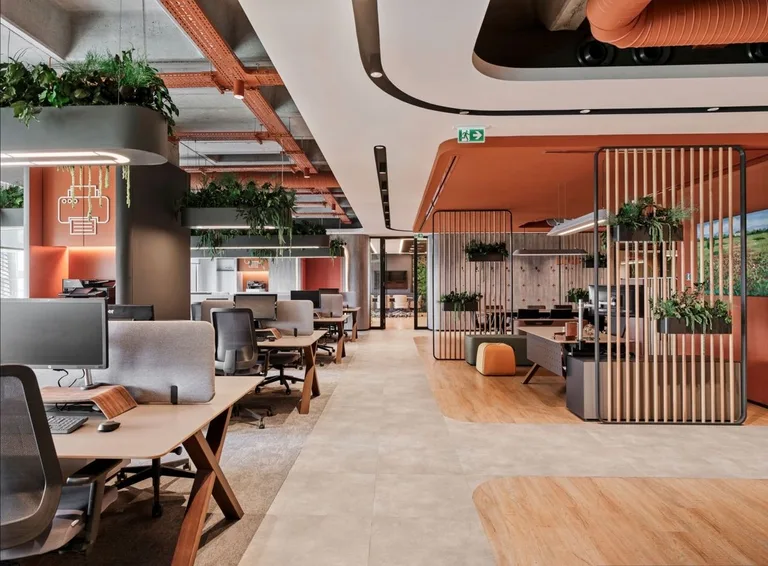
Plan in this order
- Map separately who enters, what they carry and where they turn or pause.
- Move stopping points out of through routes, especially beside doors and intersections.
- Put the largest regularly moved item on the plan and trace the full trip, including both ends.
Worked example
Imagine a shared home office where one person takes calls while another regularly brings files from a nearby cupboard. Their paths cross behind the seated worker.
Move the cupboard retrieval point toward the room edge and keep the direct route behind the chair open. Mark the chair's rolling area and simulate a file run during a call before settling the desk position.
How to test it
Run two movements at once during the test walk. Note which person must stop, reverse or step into another activity.
Apply it to this space
- Layout
- Place it at the far end from the café and route circulation around its perimeter.
- Detail
- Use sound-absorbing ceiling and soft floor finishes, with clear visual cues that calls belong elsewhere.
- Trade-off
- A remote quiet zone can feel disconnected from community activity.
- Listen during a normal busy period
- Verify the route does not cut through desk rows
The Elixir portfolio
Details worth a closer look