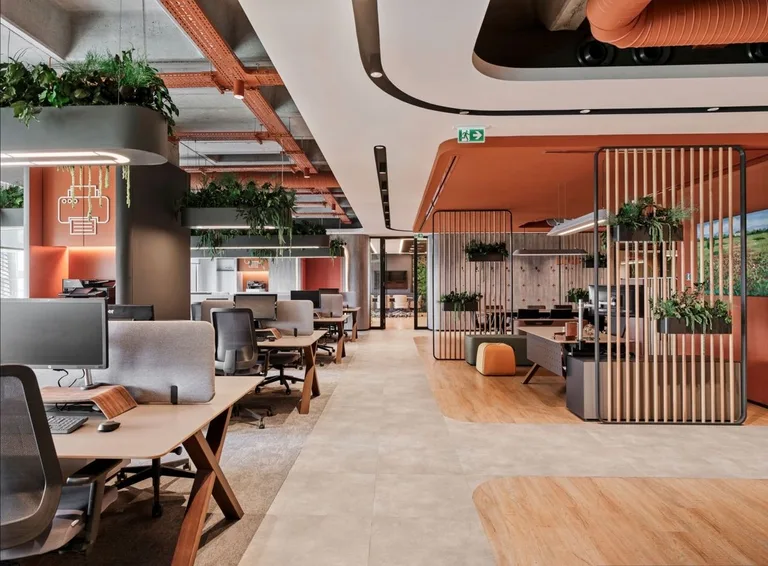
Coworking Spaces
Quiet Zone Desk and Screen Position for Coworking Spaces
Position the workstation around screen view, daylight, power and the user's dominant hand.
Explore the ideas
Plan in this order
- Mark screen view direction and window reflections from the seated position.
- Place writing and input surfaces to suit the user's handedness and equipment.
- Route power and data without crossing the chair movement area.
Worked example
Imagine a left-handed analyst whose monitor faces a bright window and whose writing hand is shadowed by a desk lamp.
Turn the screen away from direct reflection and place task light on the opposite side of the writing hand. Test reach to keyboard and notes from the actual chair.
How to test it
Work through a typical session and check glare, reach and cable movement.
Apply it to this space
- Layout
- Place it at the far end from the café and route circulation around its perimeter.
- Detail
- Use sound-absorbing ceiling and soft floor finishes, with clear visual cues that calls belong elsewhere.
- Trade-off
- A remote quiet zone can feel disconnected from community activity.
- Listen during a normal busy period
- Verify the route does not cut through desk rows
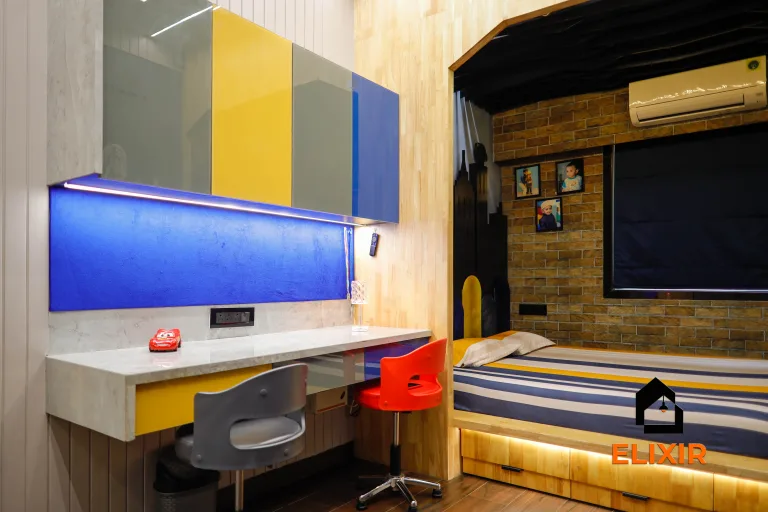
The Elixir portfolio
Details worth a closer look