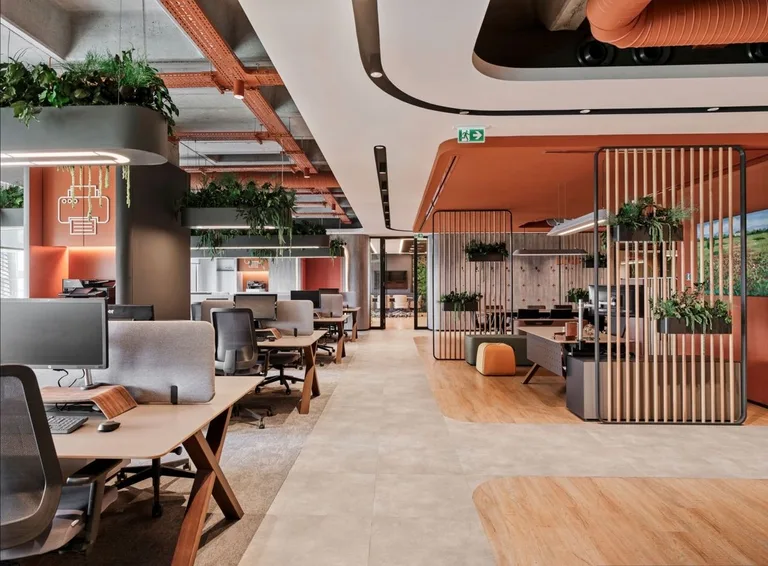
Offices
Open Workstations Lighting Design for Offices
Place light where people work or read faces. Layer task light over ambient light and test glare from occupied positions.
Explore the ideas
Plan in this order
- Mark tasks, viewing angles and screen locations on the furniture plan before placing fittings.
- Separate regularly used tasks from the room's general lighting so each can be controlled independently.
- Test the proposed fitting and finish sample together. Glossy finishes can reflect a bright source directly into view.
Worked example
Imagine a remote worker whose afternoon calls show a bright window behind their head, while the desk lamp reflects in the monitor during writing tasks.
Turn the desk so daylight reaches from the side and place controllable task light beside the writing hand. Check the camera frame and screen reflection from the actual seated position at different times of day.
How to test it
Check the space in daylight and after dark. Stand and sit where people actually use it, and check controls from the entry.
Apply it to this space
- Layout
- Arrange desk rows with a distinct aisle and keep high-traffic routes behind, rather than between, seated workers.
- Detail
- Use modest-height screens and task lights so people can tune their own work area without darkening the room.
- Trade-off
- More desk density reduces spare space for informal collaboration.
- Mock up chair pullback and aisle width
- Check screen glare at seated eye level
The Elixir portfolio
Details worth a closer look