Schools
Art Room Acoustic Design for Schools
Find the noise source and its route through the space. Treat sound leaking between rooms differently from echo inside one room.
Explore the ideas
Plan in this order
- List sources of speech, equipment and impact noise at the busiest time.
- Put quiet work away from busy edges where possible. Check doors, gaps and service penetrations before adding finishes.
- Use absorption for excessive echo. Ask an acoustic specialist where speech privacy or isolation is essential.
Worked example
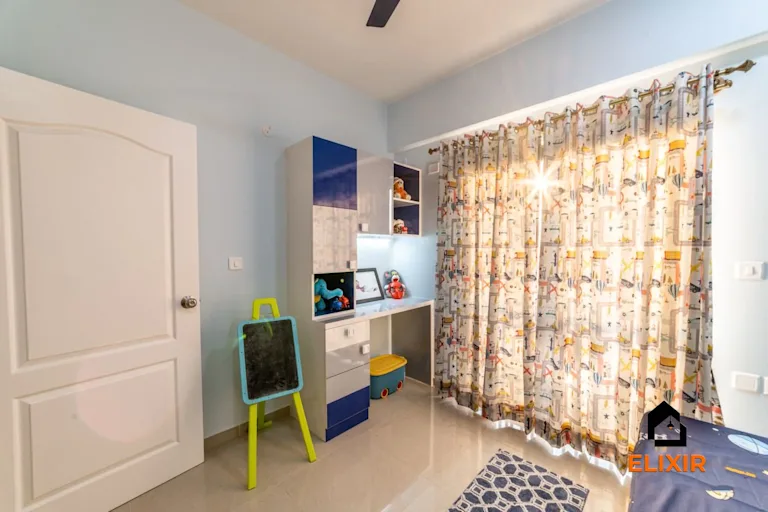
Imagine a learner trying to read beside a shared living area where conversation is audible, while the study nook itself has little echo control.
Place reading away from the busiest opening and use soft surfaces to reduce reflections around the desk. Treat sound leakage and room echo separately; seek specialist advice if speech privacy is important.
How to test it
Recreate the noisier activity and listen from adjoining seats and rooms with doors both open and closed.
Apply it to this space
- Layout
- Place sinks and messy work together, with drying and display surfaces away from splash zones.
- Detail
- Use washable finishes, task lighting with good color clarity, and accessible drying racks.
- Trade-off
- More sink and cleanup capacity uses space for making and display.
- Trace a project from setup through cleanup
- Check drying work does not obstruct exits or sightlines
The Elixir portfolio
Details worth a closer look