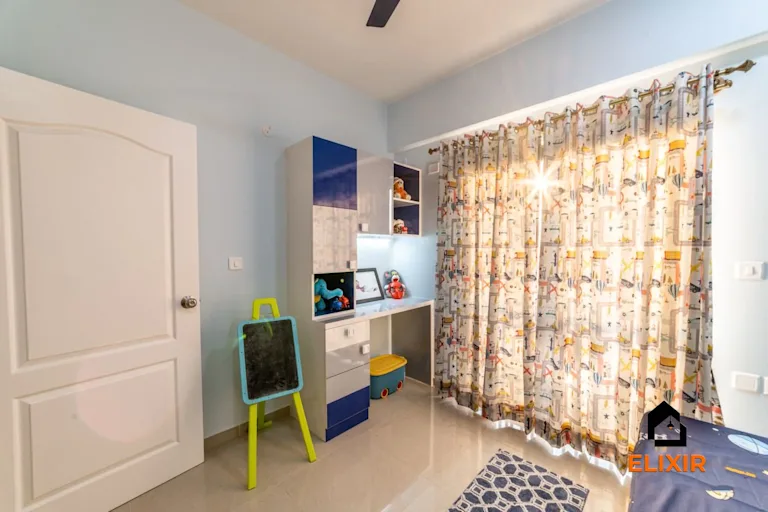
Schools
Classroom Study Desk and Materials for Schools
Keep active learning materials within reach while leaving enough clear surface for the current task.
Explore the ideas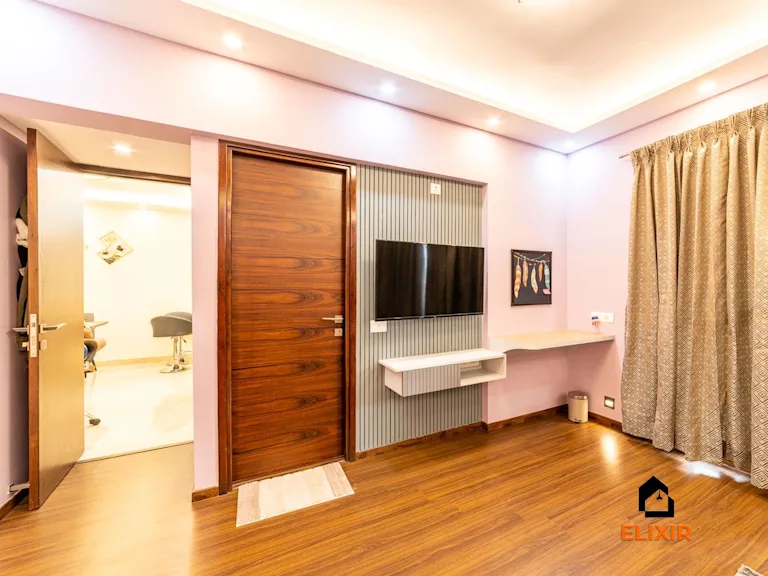
Plan in this order
- List the books, devices and supplies used in a normal study session.
- Place current materials at the desk and archive or share occasional items elsewhere.
- Keep the work surface clear enough to switch between reading and writing.
Worked example
Imagine a student alternating between a laptop lesson and handwritten notes, with textbooks stacked over the only clear writing area.
Keep the current book upright or on a nearby shelf and reserve the central surface for the active task. Add a tray for completed notes so the desk can reset between subjects.
How to test it
Complete a typical study task and note every interruption caused by storage or reach.
Apply it to this space
- Layout
- Keep a clear teaching wall and arrange desks so students can turn into small groups without blocking the route.
- Detail
- Use glare-controlled board lighting, durable desk edges, and accessible storage for shared supplies.
- Trade-off
- More flexible furniture makes transitions easier but requires a clear storage plan.
- Reconfigure from rows to groups
- Check teacher sightlines from seated positions
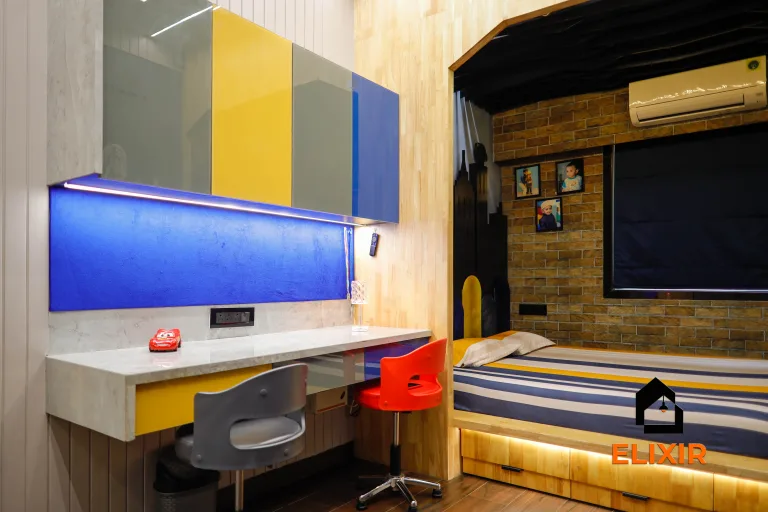
The Elixir portfolio
Details worth a closer look