Schools
Library Homework Lighting for Schools
Layer general and task light for reading and writing, accounting for handedness and screen use.
Explore the ideas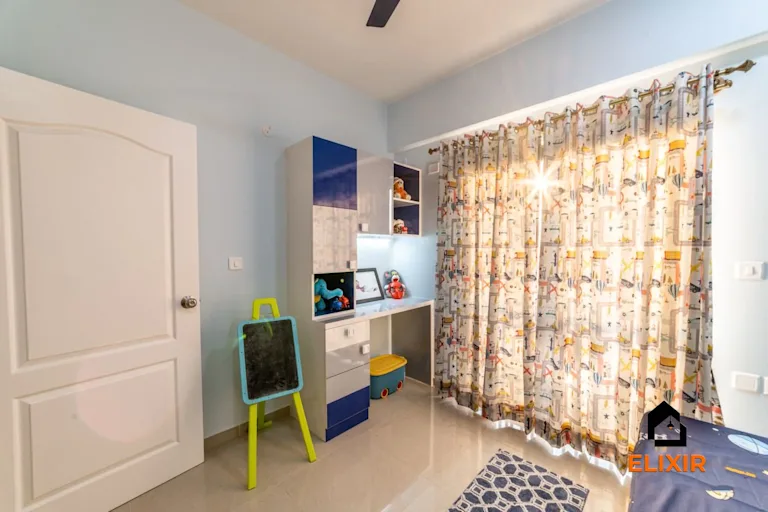
Walkthrough checklist
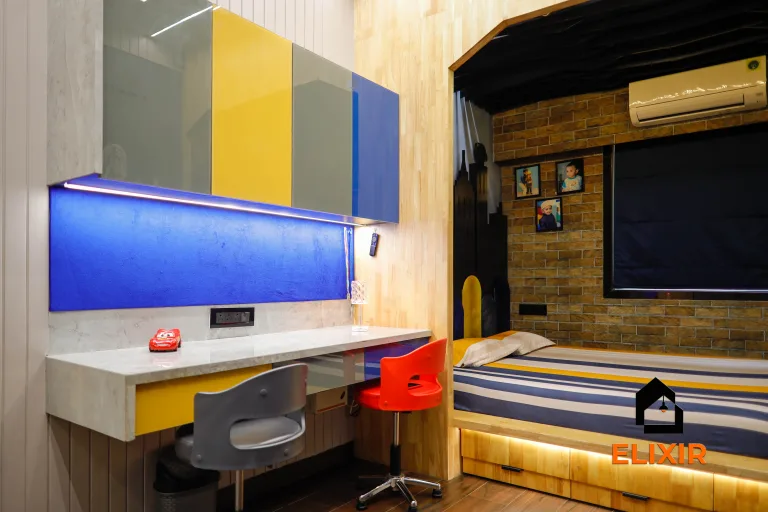
- Place the desk to control window glare on paper and screens.
- Position task light on the side that keeps the writing hand from casting a shadow.
- Make controls reachable to the learner and appropriate for the room's use.
Worked example
Imagine a right-handed learner writing at a desk under a ceiling light that leaves the hand casting a shadow over the page.
Place the task lamp on the opposite side of the writing hand and angle it toward the page. Check that it does not reflect in a nearby screen or shine directly into the learner's eyes.
How to test it
Check reading, writing and screen work at the desk after daylight changes.
Apply it to this space
- Layout
- Place quiet reading at the far edge and group tables near the entrance or resource counter.
- Detail
- Use readable shelf labels, task light at tables, and soft finishes in designated quiet areas.
- Trade-off
- More group seating can raise noise across the library.
- Listen from the quietest seat during group use
- Check shelf aisles allow two students to pass
The Elixir portfolio
Details worth a closer look