Schools
Cafeteria Lighting Design for Schools
Place light where people work or read faces. Layer task light over ambient light and test glare from occupied positions.
Explore the ideas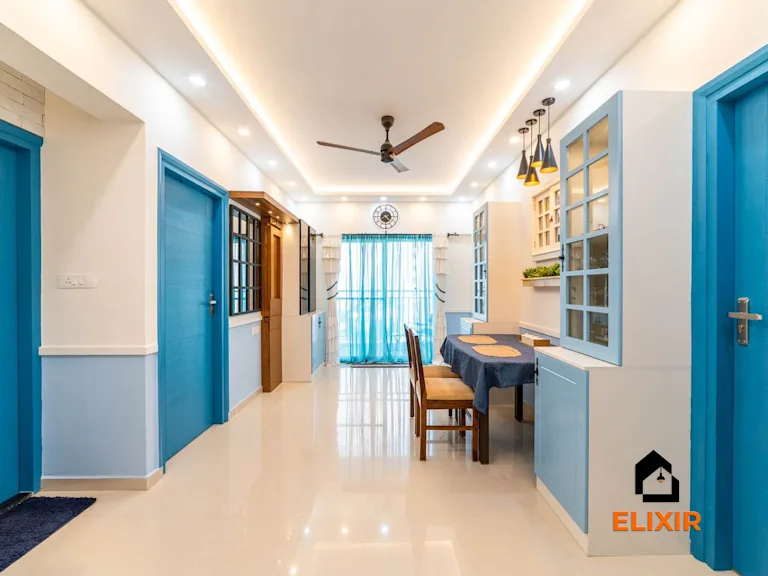
Plan in this order
- Mark tasks, viewing angles and screen locations on the furniture plan before placing fittings.
- Separate regularly used tasks from the room's general lighting so each can be controlled independently.
- Test the proposed fitting and finish sample together. Glossy finishes can reflect a bright source directly into view.
Worked example
A dining pendant creates a bright pool on the table but leaves faces dim and the nearby serving surface hard to use.
Keep the pendant for the table and add separately controlled ambient light with a small task source at serving. Check reflected glare from seated positions and while carrying dishes.
How to test it
Check the space in daylight and after dark. Stand and sit where people actually use it, and check controls from the entry.
Apply it to this space
- Layout
- Place queue, serving, seating, and tray return in a one-way sequence with separate entry and exit movement where possible.
- Detail
- Choose easy-clean tables and floors, with light that makes food and labels clear without glare.
- Trade-off
- A single queue is easier to supervise but can become slow at busy transitions.
- Simulate the queue with a full class group
- Check tray return does not cross incoming diners
The Elixir portfolio
Details worth a closer look