Schools
Cafeteria Storage Design for Schools
Plan storage around frequency of use and the route between use and return. Measure the actual items, including handles and cases.
Explore the ideas
Plan in this order
- Sort items into daily, occasional and surplus stock, then measure each group's largest pieces.
- Place daily items at the point of use and reserve a separate area for overflow or refills.
- Choose shelf spans, pull-outs and closures only after checking how items are loaded and removed.
Worked example
Board games, chargers, and serving pieces all occupy the coffee table before guests arrive.
Give games a closed cabinet near the lounge and serving pieces a separate dining-side cupboard. Check each item’s retrieval and return path while the room is arranged for visitors.
How to test it
Put the largest item into a mock-up and remove it with the adjacent doors or work surfaces in use.
Apply it to this space
- Layout
- Place queue, serving, seating, and tray return in a one-way sequence with separate entry and exit movement where possible.
- Detail
- Choose easy-clean tables and floors, with light that makes food and labels clear without glare.
- Trade-off
- A single queue is easier to supervise but can become slow at busy transitions.
- Simulate the queue with a full class group
- Check tray return does not cross incoming diners
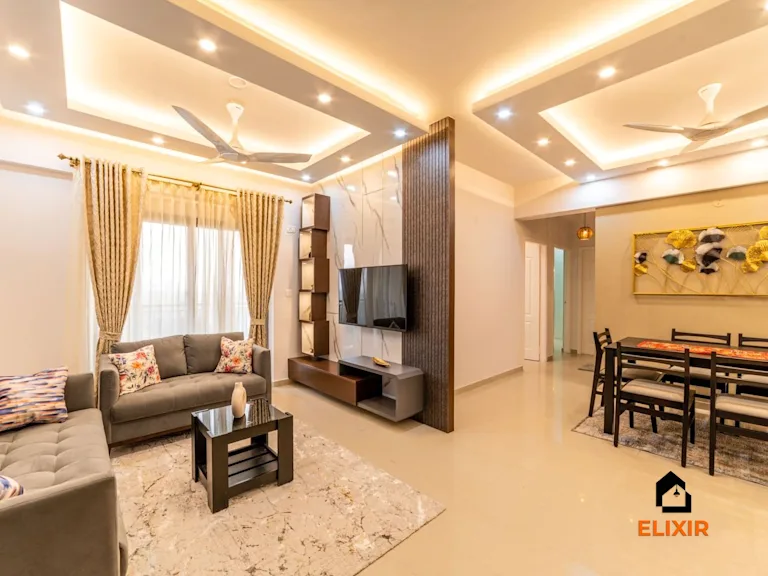
The Elixir portfolio
Details worth a closer look