Senior living homes
Bathroom Acoustic Design for Senior living homes
Find the noise source and its route through the space. Treat sound leaking between rooms differently from echo inside one room.
Explore the ideas
Plan in this order
- List sources of speech, equipment and impact noise at the busiest time.
- Put quiet work away from busy edges where possible. Check doors, gaps and service penetrations before adding finishes.
- Use absorption for excessive echo. Ask an acoustic specialist where speech privacy or isolation is essential.
Worked example
Imagine a resident who hears a nearby television clearly but struggles to follow conversation because the room echoes. A caregiver also needs to hear a call bell.
Reduce room echo with soft, cleanable surfaces while keeping alert sounds audible from the caregiver's normal position. Test with the resident and care team; consult an acoustic professional if sound isolation is needed.
How to test it
Recreate the noisier activity and listen from adjoining seats and rooms with doors both open and closed.
Apply it to this space
- Layout
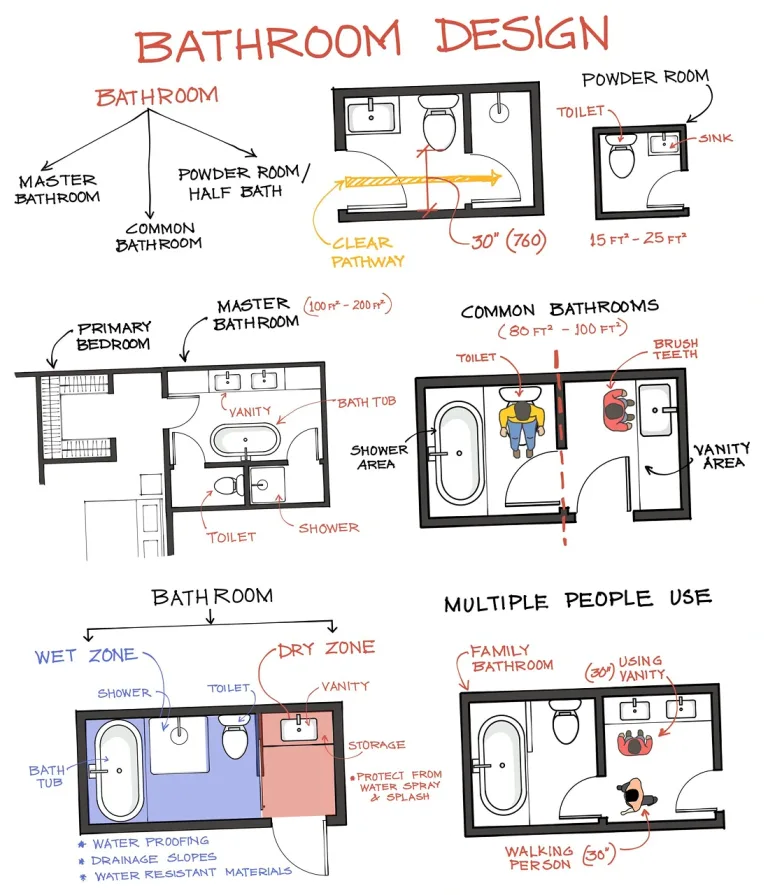
- Keep entry, toilet and shower approach unobstructed; place frequently used items within seated or standing reach.
- Detail
- Choose visually distinct fittings and non-glare lighting; select appropriate support features with a qualified professional.
- Trade-off
- Additional support features can feel institutional if their placement ignores the room’s overall design.
- Review transfers and reach with the resident
- Check slip risks, lighting and water controls
The Elixir portfolio
Details worth a closer look