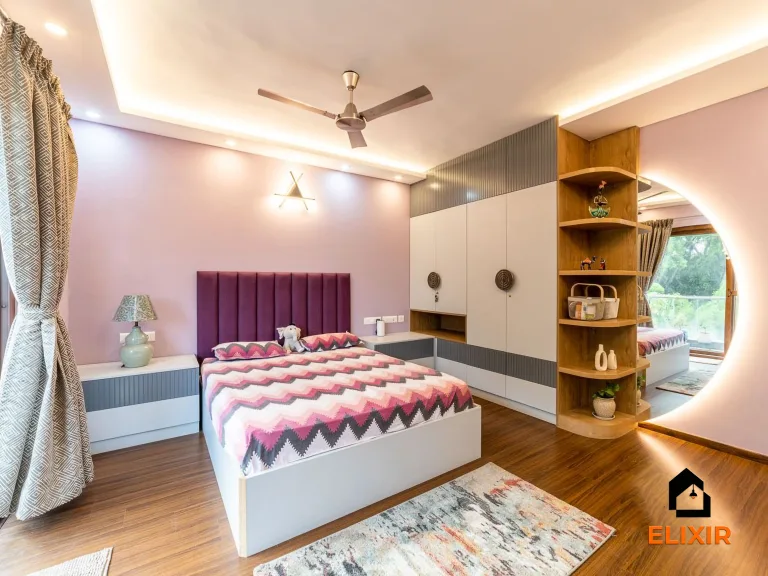
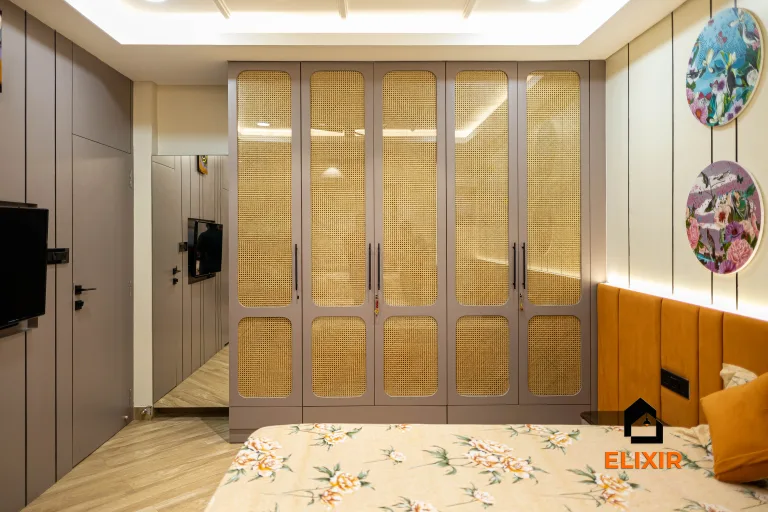
Senior living homes
Bedroom Acoustic Design for Senior living homes
Find the noise source and its route through the space. Treat sound leaking between rooms differently from echo inside one room.
Explore the ideas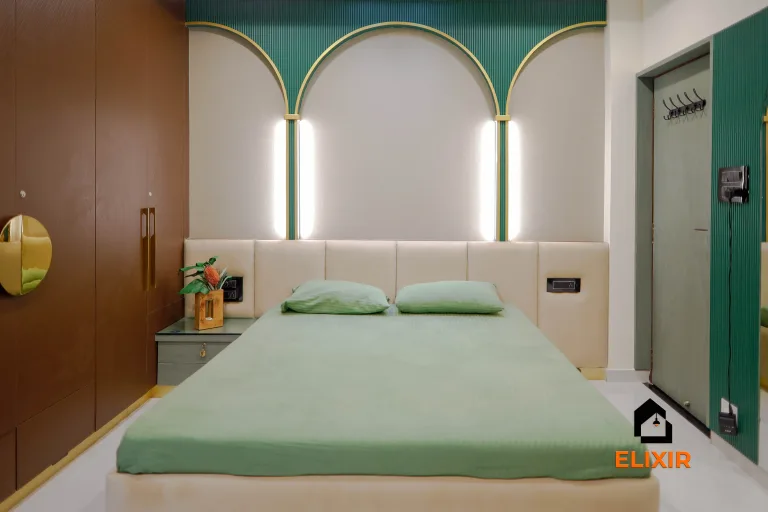
Plan in this order
- List sources of speech, equipment and impact noise at the busiest time.
- Put quiet work away from busy edges where possible. Check doors, gaps and service penetrations before adding finishes.
- Use absorption for excessive echo. Ask an acoustic specialist where speech privacy or isolation is essential.
Worked example
Street noise wakes a light sleeper in a room with a large window and hard floor.
Check window seals and soft window treatments first, then add a rug; distinguish outside leakage from room echo.
How to test it
Recreate the noisier activity and listen from adjoining seats and rooms with doors both open and closed.
Apply it to this space
- Layout
- Keep the bed approach open on the needed side and put clothing storage near dressing space.
- Detail
- Use bedside controls and a low-level night light that guides the route without glare.
- Trade-off
- More bedside furniture adds reach convenience but narrows movement space.
- Rehearse the nighttime route
- Check wardrobe reach and door operation
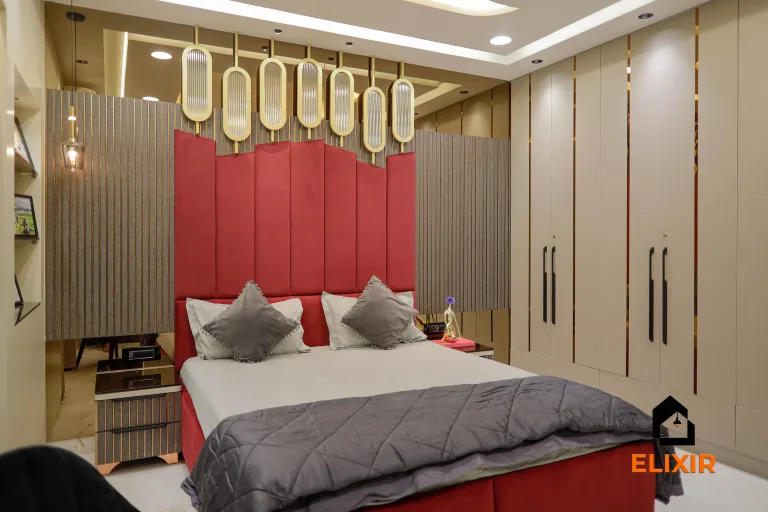
The Elixir portfolio
Details worth a closer look