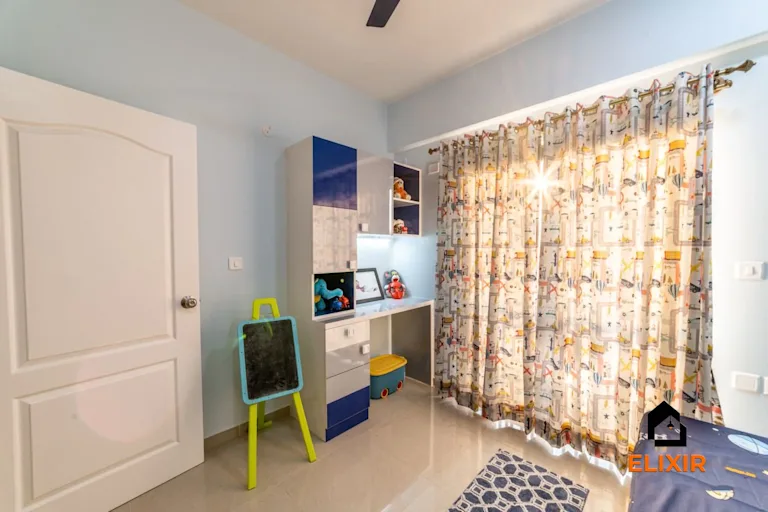
Small homes and studios
Work nook Storage Design for Small homes and studios
Plan storage around frequency of use and the route between use and return. Measure the actual items, including handles and cases.
Explore the ideas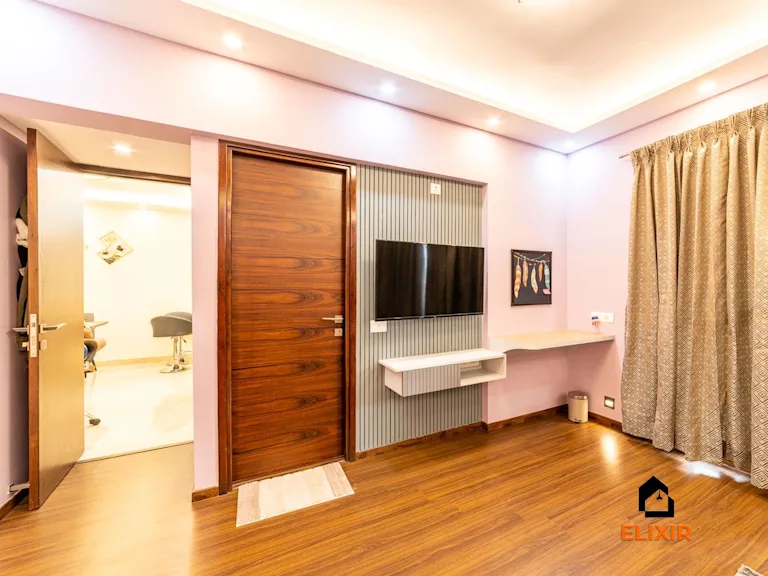
Plan in this order
- Sort items into daily, occasional and surplus stock, then measure each group's largest pieces.
- Place daily items at the point of use and reserve a separate area for overflow or refills.
- Choose shelf spans, pull-outs and closures only after checking how items are loaded and removed.
Worked example
Imagine a designer who needs active samples, a laptop and reference books in daily reach, while archived project folders should not occupy the worktop.
Give current samples a shallow tray beside the desk and move archives to labeled closed storage. Keep the laptop's charging point near its normal parking place, and test retrieval without blocking the chair.
How to test it
Put the largest item into a mock-up and remove it with the adjacent doors or work surfaces in use.
Apply it to this space
- Layout
- Fit a desk into an alcove or wall run near daylight but away from the bed’s direct sightline.
- Detail
- Use a fold-down desk, task lamp and a concealed cable route.
- Trade-off
- A fold-down surface saves space but offers less permanence and equipment capacity.
- Check chair pullback when desk is open
- Test screen glare at work hours
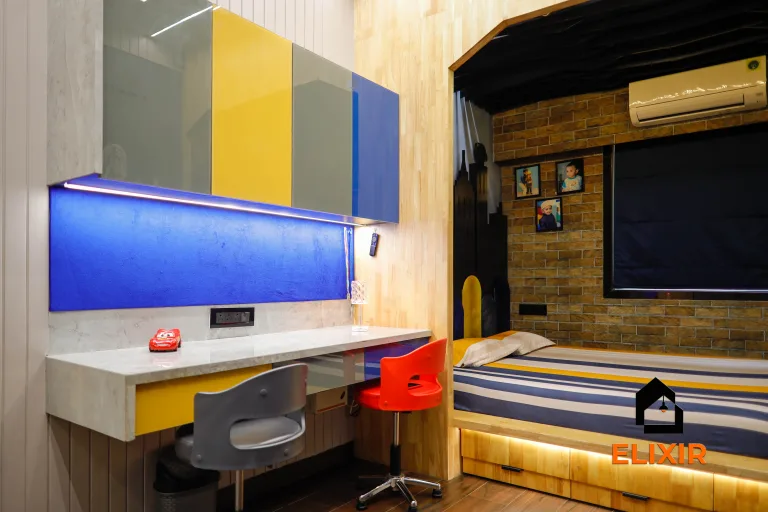
The Elixir portfolio
Details worth a closer look