Coworking Spaces
Hot Desks Acoustic Design for Coworking Spaces
Find the noise source and its route through the space. Treat sound leaking between rooms differently from echo inside one room.
Explore the ideas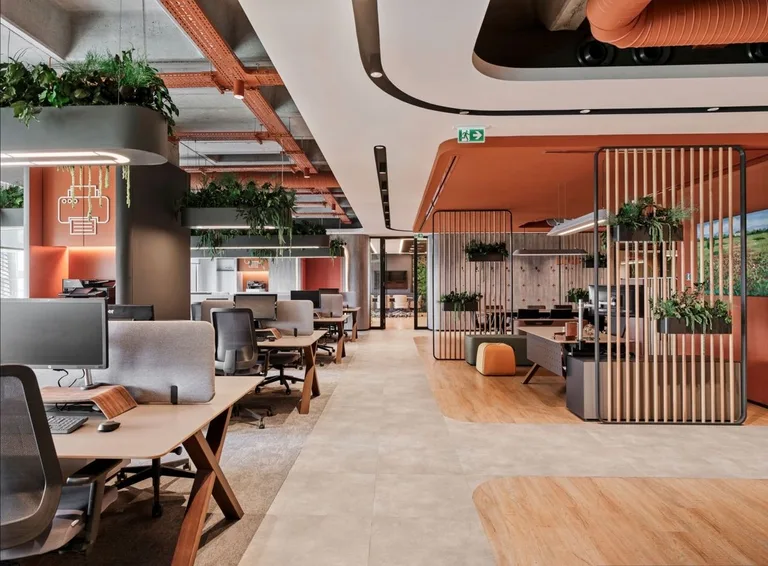
Plan in this order
- List sources of speech, equipment and impact noise at the busiest time.
- Put quiet work away from busy edges where possible. Check doors, gaps and service penetrations before adding finishes.
- Use absorption for excessive echo. Ask an acoustic specialist where speech privacy or isolation is essential.
Worked example
Imagine a home office beside a living room where television speech enters the background of calls. Soft furnishings reduce echo at the desk but do little for sound through the doorway.
First identify the sound path at the door and any gaps; use a closable door or sealing detail if appropriate. Add absorption for room echo separately, and seek acoustic advice if speech privacy matters.
How to test it
Recreate the noisier activity and listen from adjoining seats and rooms with doors both open and closed.
Apply it to this space
- Layout
- Mark desk groups by use and keep a clear aisle between shared tables and fixed offices.
- Detail
- Provide reachable outlets at table ends and task lighting that does not depend on one central switch.
- Trade-off
- Flexible tables maximize choice but offer less personal storage.
- Try laptop charging at every seat
- Check chair movement at full occupancy
The Elixir portfolio
Details worth a closer look