Offices
Focus Rooms Workstation Light Control for Offices
Layer room and task light to reduce screen reflections and support focused work through the day.
Explore the ideas
Plan in this order
- Map daylight direction and monitor position before choosing task lighting.
- Put controllable task light on the side that does not cast the user's hand shadow.
- Separate work lighting from ambient lighting so each can be adjusted.
Worked example
Imagine a programmer switching between a monitor and handwritten notes as daylight shifts across the desk.
Keep the monitor out of the direct window reflection and provide separately controlled task lighting for paper. Test the controls from the seated position and avoid glare on glossy surfaces.
How to test it
Check the screen and paper surface at the workstation during different daylight conditions.
Apply it to this space
- Layout
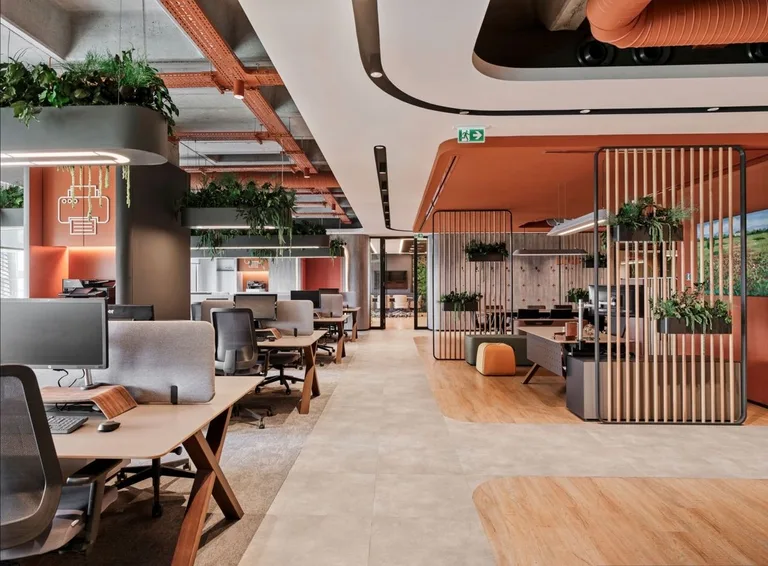
- Place focus rooms at the quiet edge of the floor and keep their doors away from the main meeting-room queue.
- Detail
- Choose an acoustic door seal, a small work surface, and controllable light; provide a visible occupancy cue.
- Trade-off
- More enclosed rooms reduce the flexibility of open team space.
- Listen from the corridor during a call
- Check ventilation and task-light reach
The Elixir portfolio
Details worth a closer look