Schools
Learning Lab Study Desk and Materials for Schools
Keep active learning materials within reach while leaving enough clear surface for the current task.
Explore the ideas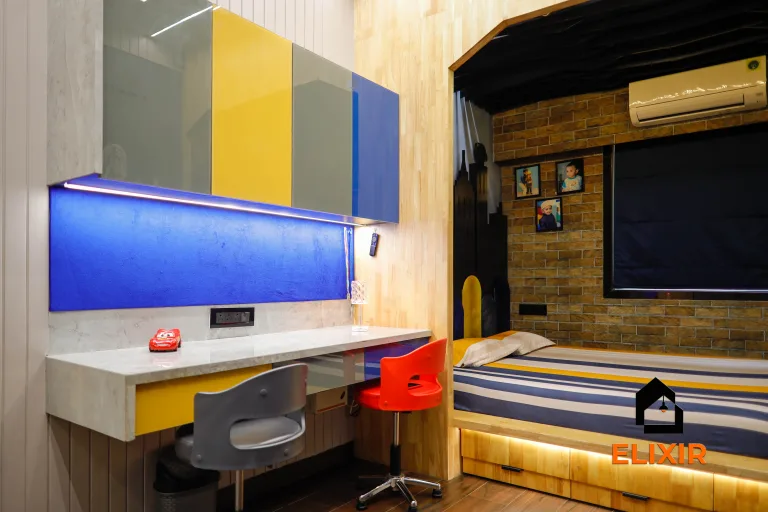
Plan in this order
- List the books, devices and supplies used in a normal study session.
- Place current materials at the desk and archive or share occasional items elsewhere.
- Keep the work surface clear enough to switch between reading and writing.
Worked example
Imagine a student alternating between a laptop lesson and handwritten notes, with textbooks stacked over the only clear writing area.
Keep the current book upright or on a nearby shelf and reserve the central surface for the active task. Add a tray for completed notes so the desk can reset between subjects.
How to test it
Complete a typical study task and note every interruption caused by storage or reach.
Apply it to this space
- Layout
- Arrange tables around a central demonstration surface and keep material storage along the perimeter.
- Detail
- Choose hard-wearing worktops, task lighting, and clearly labeled storage for shared tools.
- Trade-off
- More open collaboration area reduces fixed storage capacity.
- Set up a typical project activity
- Check teacher visibility across the room
The Elixir portfolio
Details worth a closer look