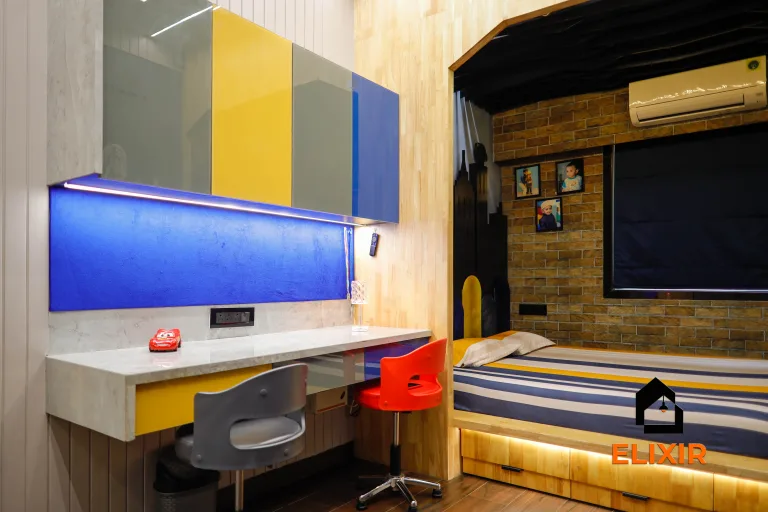
Schools
Library Storage Design for Schools
Plan storage around frequency of use and the route between use and return. Measure the actual items, including handles and cases.
Explore the ideas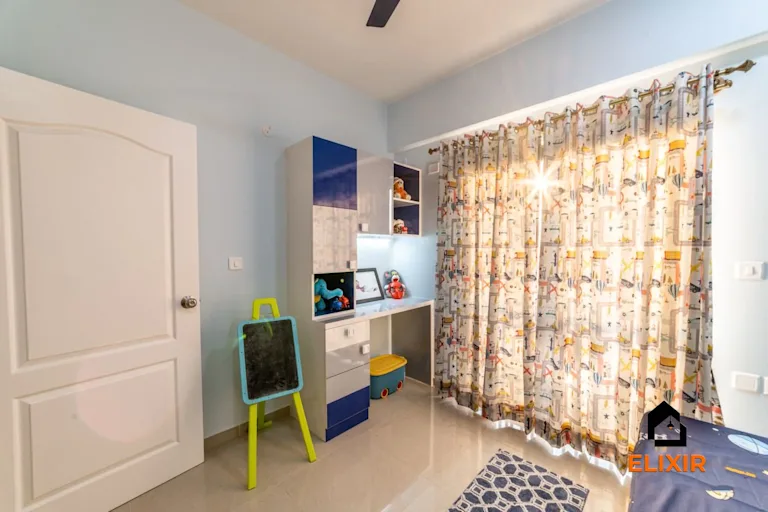
Plan in this order
- Sort items into daily, occasional and surplus stock, then measure each group's largest pieces.
- Place daily items at the point of use and reserve a separate area for overflow or refills.
- Choose shelf spans, pull-outs and closures only after checking how items are loaded and removed.
Worked example
Imagine a learner leaving unfinished projects spread across the desk because there is no place to keep work in progress separate from finished assignments.
Create a shallow, labeled in-progress tray beside the desk and a separate finished-work file. Keep daily tools in one reachable container so the surface can reset without losing the current project.
How to test it
Put the largest item into a mock-up and remove it with the adjacent doors or work surfaces in use.
Apply it to this space
- Layout
- Place quiet reading at the far edge and group tables near the entrance or resource counter.
- Detail
- Use readable shelf labels, task light at tables, and soft finishes in designated quiet areas.
- Trade-off
- More group seating can raise noise across the library.
- Listen from the quietest seat during group use
- Check shelf aisles allow two students to pass
The Elixir portfolio
Details worth a closer look