Kitchen finish decision guide

Laminate vs acrylic vs PU: which kitchen shutter finish should you choose?

The shutter finish is what you see and touch every day, so it shapes how the kitchen looks after five years, not just on handover day. In a Chennai kitchen, it has to cope with steam, turmeric and oil splashes, and humid air that peaks in the October to December monsoon. This guide compares laminate, acrylic, PU, membrane and glass on durability, scratches, gloss, upkeep, repairs and relative cost, with the cost gaps checked against published Indian price ranges.

Updated

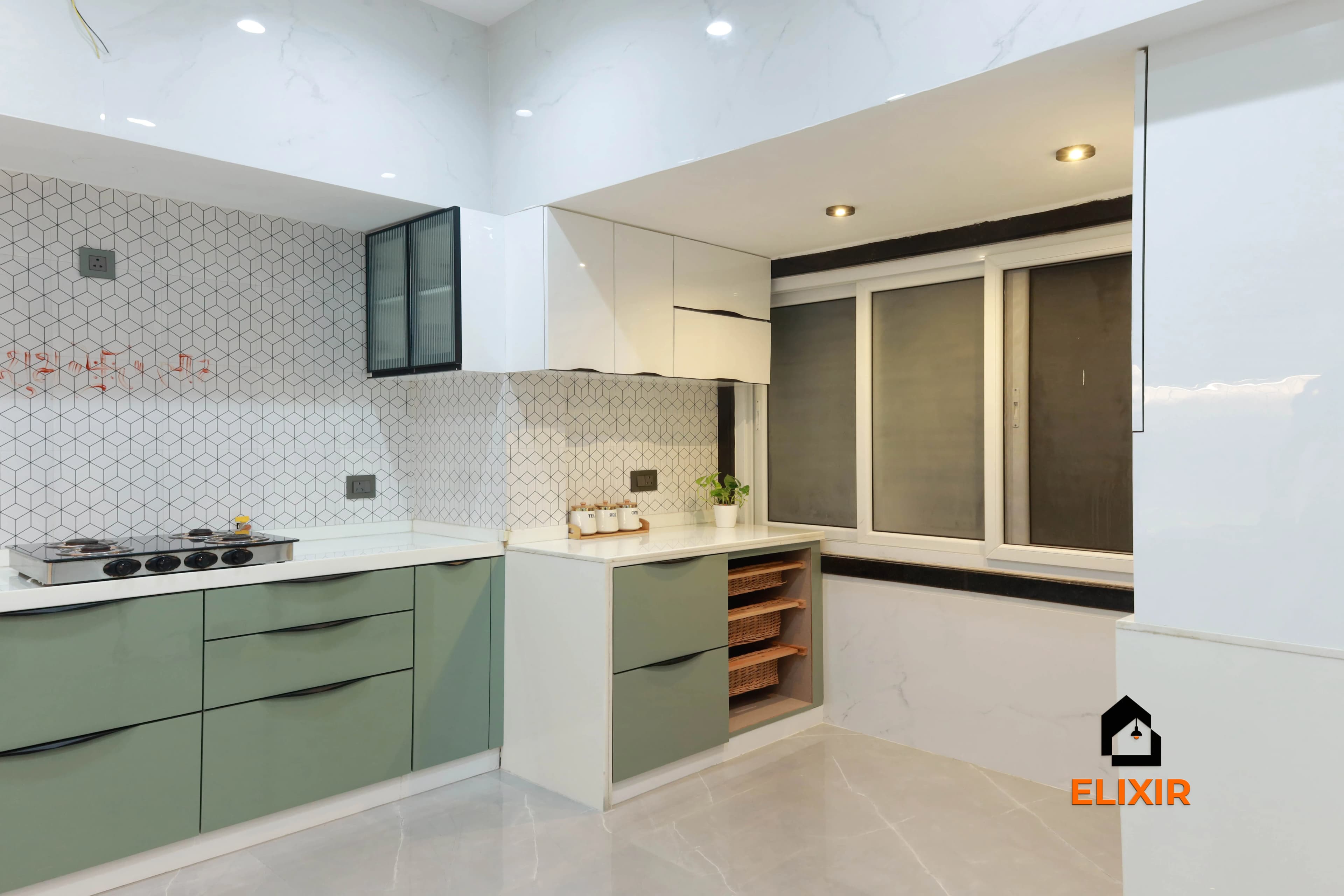
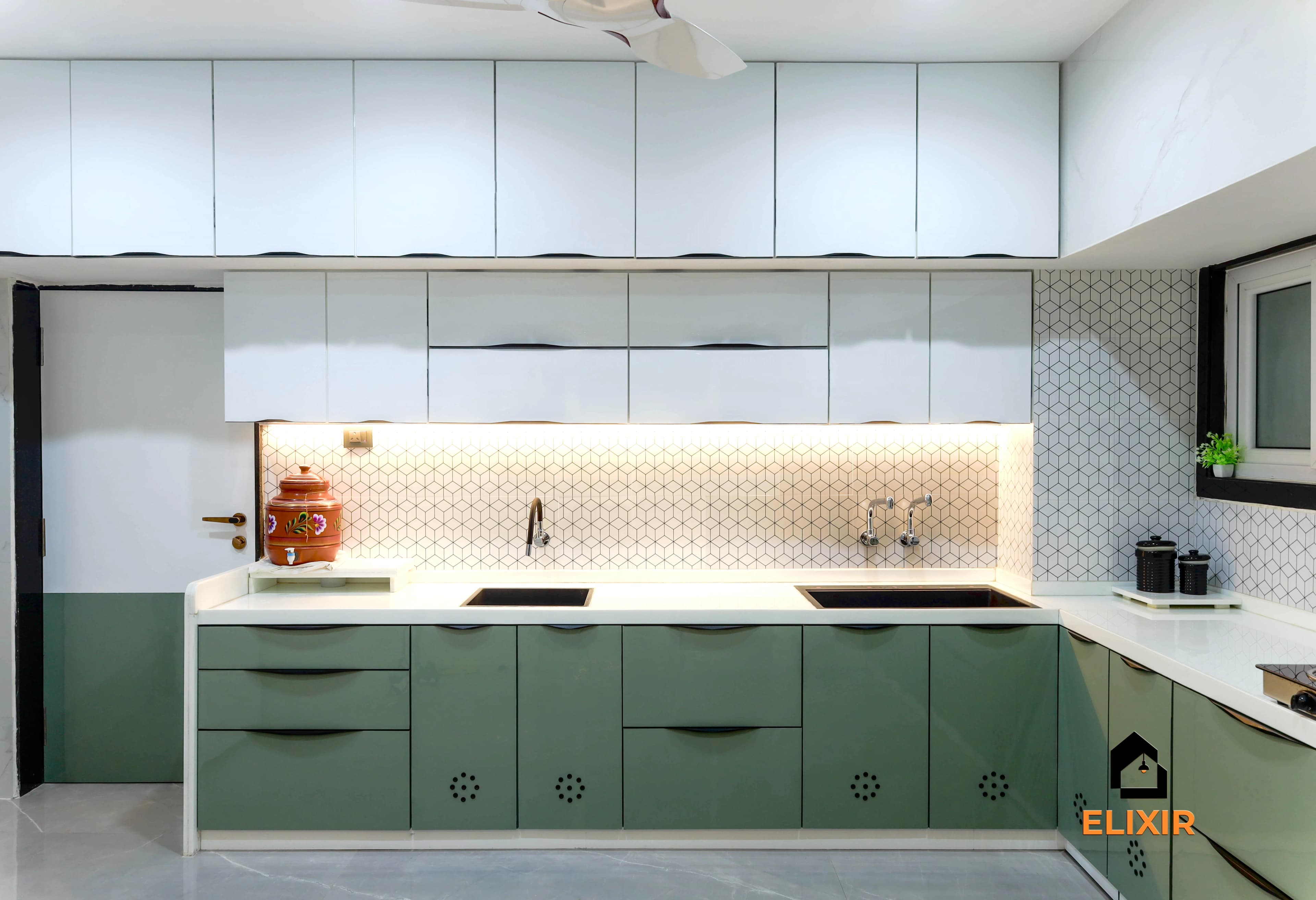
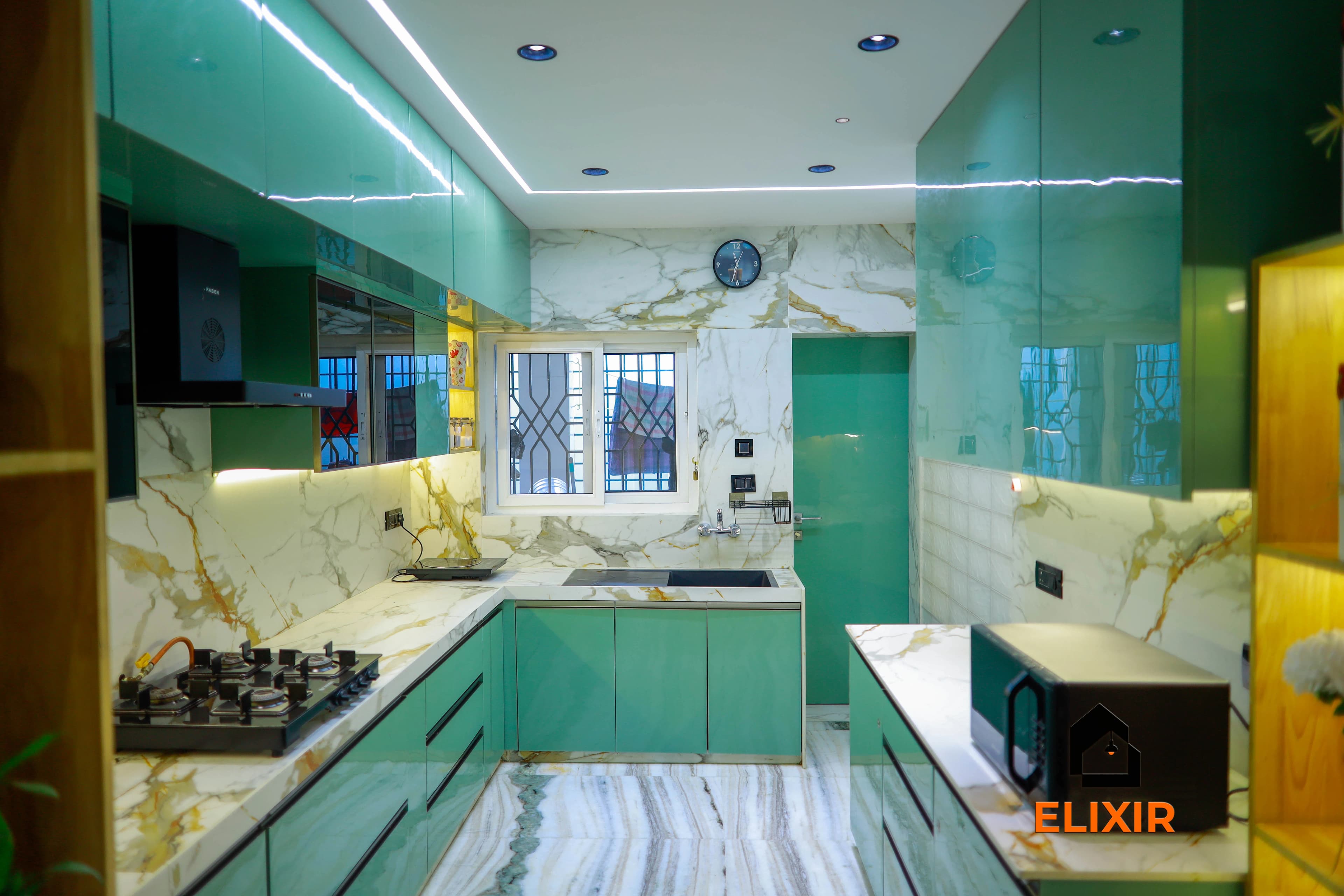
Parallel kitchen with teal acrylic shutters, marble-look backsplash and profile lighting in a renovated Velachery home

An Elixir home in Velachery, Chennai

Quick answer

Which is the best finish for modular kitchen shutters?

Laminate is the most practical all-rounder: tough, easy to clean and among the lowest in cost. Acrylic gives a deep mirror gloss for roughly 50–100% more but shows fine scratches. PU paint offers seamless custom colours and can be repaired, at about two to three times the cost of laminate. Most Chennai families pick matte or suede laminate, adding acrylic or PU on a few feature shutters.

Key takeaways

  • Laminate is the toughest everyday finish for its cost and comes in matte, suede, textured and gloss options.
  • Acrylic gives a high, even gloss for roughly 50–100% more than laminate, but picks up fine scratches; it suits low-touch wall units and households that wipe often.
  • PU (polyurethane lacquer) gives seamless colour and curved edges and can be repainted, but costs the most, often two to three times laminate.
  • Membrane (PVC foil) costs about the same as laminate and suits routed and profiled shutters in dry areas; avoid it beside the hob, where heat can lift the foil.
  • Lacquered glass is the priciest shutter face, roughly three to four times laminate, and belongs on wall units and crockery display, not base units.
  • Many good kitchens mix finishes: laminate for base units, acrylic or PU for wall units or a tall pantry.

The short version

Which should you choose?

Choose this if

Laminate

  • You cook Indian food daily with heavy tadka and want a finish that shrugs off stains and scrubbing
  • You want the best durability for the money
  • You prefer matte, suede or wood-grain textures that hide fingerprints
  • You have children or a busy household where shutters take knocks

Choose this if

Acrylic

  • You want a mirror-like high gloss that makes a compact kitchen feel brighter
  • You are comfortable wiping shutters with a soft cloth and avoiding abrasive pads
  • Your kitchen has a separate wet or utility area that takes the heavy cooking
  • You want a gloss look at a lower cost than PU

Choose this if

PU or lacquer

  • You want a specific custom colour or a seamless, edge-free look
  • Your design uses curved, routed or handle-less profiles
  • You want a finish that can be touched up or repainted years later

Kitchen shutter finishes compared

Approximate comparison for shutters on HDHMR or plywood in a typical Chennai apartment kitchen.

FactorLaminateAcrylicPU / lacquerMembraneGlass
Relative cost (finish only)BaselineRoughly 50–100% more than laminateRoughly 2–3 times laminateAbout the same as laminate, sometimes slightly lessLacquered glass roughly 3–4 times laminate
Scratch resistanceHigh, especially matte and texturedModerate; fine swirl marks showGood with quality coatsModerateVery high on the face, edges can chip
Gloss optionsMatte to high glossHigh gloss, some matte rangesMatte, satin or high glossMatte to glossClear, frosted or lacquered
Heat and steam near the hobGoodGood for indirect heat; keep a gap from the hobGood with quality coatsWeak; foil can lift with heatVery good
Stain resistance (turmeric, oil)HighHigh on face; wipe quicklyHigh if well sealedModerateHigh
Daily upkeepEasiest; damp cloth and mild soapSoft microfibre only, no scrubbersSoft cloth; avoid harsh cleanersDamp clothGlass cleaner; shows smudges
Edge lookVisible edge bandMatching edge band, near seamlessSeamless, can be curvedWrapped edges, no bandAluminium or wood frame
RepairabilityPanel replaced if chippedLight scratches can be polishedTouch-up and repaint possiblePanel replaced if foil peelsGlass replaced
Colour matching laterEasy if the code is still madeModerate; ranges changeEasiest; colour can be remixedModerateEasy
Best place in the kitchenBase units, tall units, everywhereWall units, feature shuttersFeature walls, islands, handle-less designsDry wall units, profiled shuttersWall units and crockery display

Cost ratios compare the finish alone, using published Indian per-square-foot ranges (Asian Paints Beautiful Homes and NoBroker). Quotes vary widely by brand, board, thickness and city, and some vendors quote the whole cabinet rather than the finish, so compare like with like. See the modular kitchen cost page for current ranges.

01

Laminate: the everyday workhorse

Laminate is a thin decorative sheet pressed onto the board with adhesive. It is the most common kitchen finish in Chennai because it resists stains, heat and scrubbing at the lowest cost.

The visible edge band is the main giveaway. Ask for edge banding in the same shade, ideally applied by machine, so the edges stay sealed against steam.

Sheet thickness
0.8 or 1 mm
Common laminate thicknesses
Relative cost
Baseline
The other finishes on this page are compared to laminate

Most common

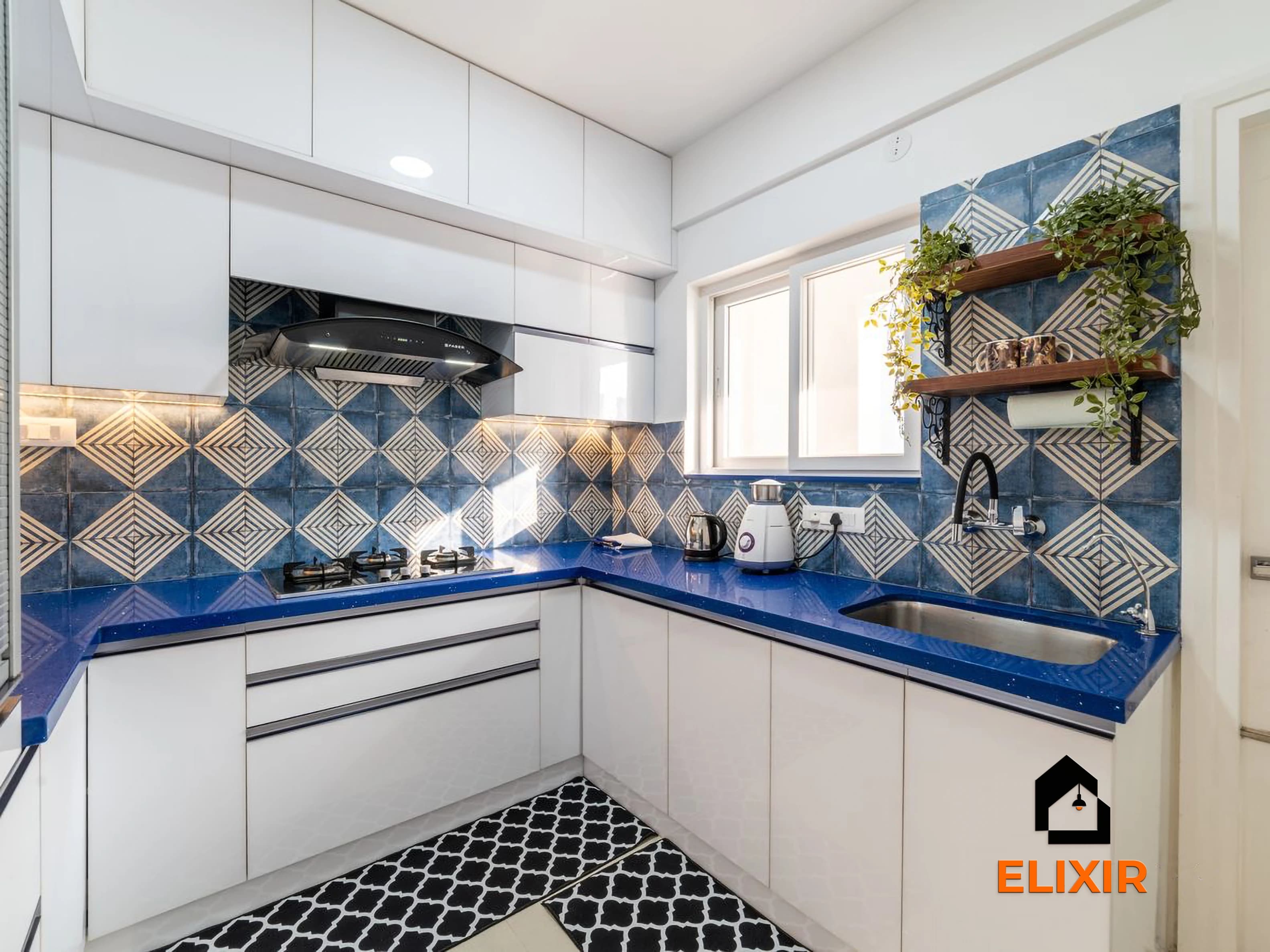
Matte, suede and textured

Hide fingerprints and fine scratches well, which suits families who cook two or three meals a day.

Gloss on a budget

High-gloss laminate

Looks close to acrylic from a distance, though the gloss is less deep.

Designer tip: A balancing laminate on the inside face of each shutter helps stop tall doors from bowing in humid months.
02

Acrylic and PU: gloss, colour and care

Acrylic is a solid acrylic sheet bonded to the board, giving a deep, even gloss that reflects light around a compact kitchen. PU (polyurethane) or lacquer finishes are sprayed in several coats and sanded between them, so the paint wraps the edges.

Keep acrylic shutters slightly away from the hob and out of the path of hot air from an oven, as sustained heat can dull the sheet or loosen the edge band.

Acrylic vs PU

AspectAcrylicPU / lacquer
LookDeep, even glossSeamless; can be curved or grooved
ColourFixed rangeAny colour can be mixed
SurfaceEasy to wipe but softer than laminate; scrubbers and gritty cloths leave swirl marksGood with quality coats
RepairLight scratches can often be polished outChipped shutter can be touched up or repainted, not replaced
HeatHandles indirect heat wellGood with quality coats
Cost and lead timeRoughly 50–100% more than laminateAbout 2–3 times laminate; each coat must cure, and spray work and finishing labour drive the cost

Designer tip: Acrylic gives the gloss. PU gives the colour freedom and the ability to repair.

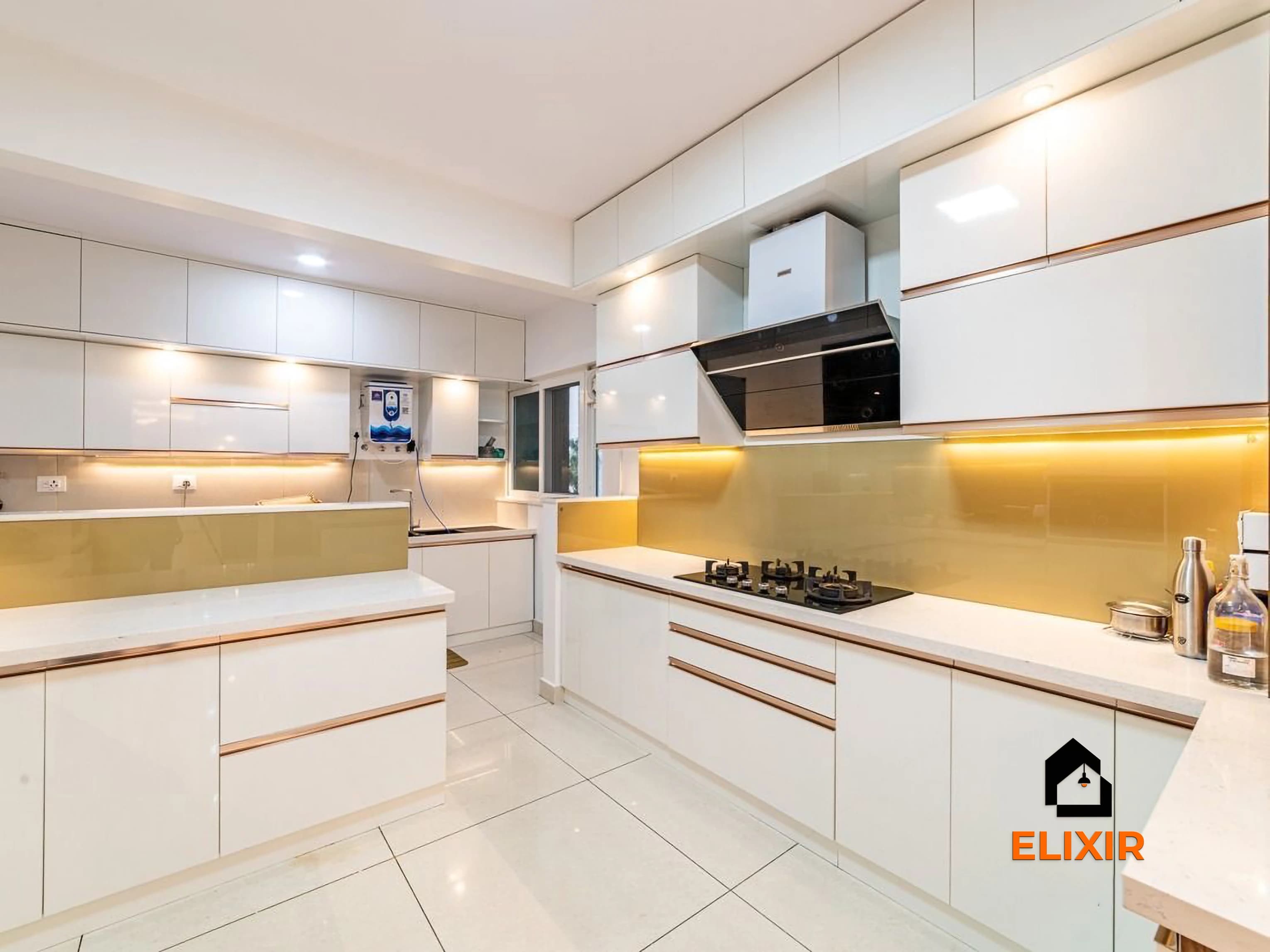
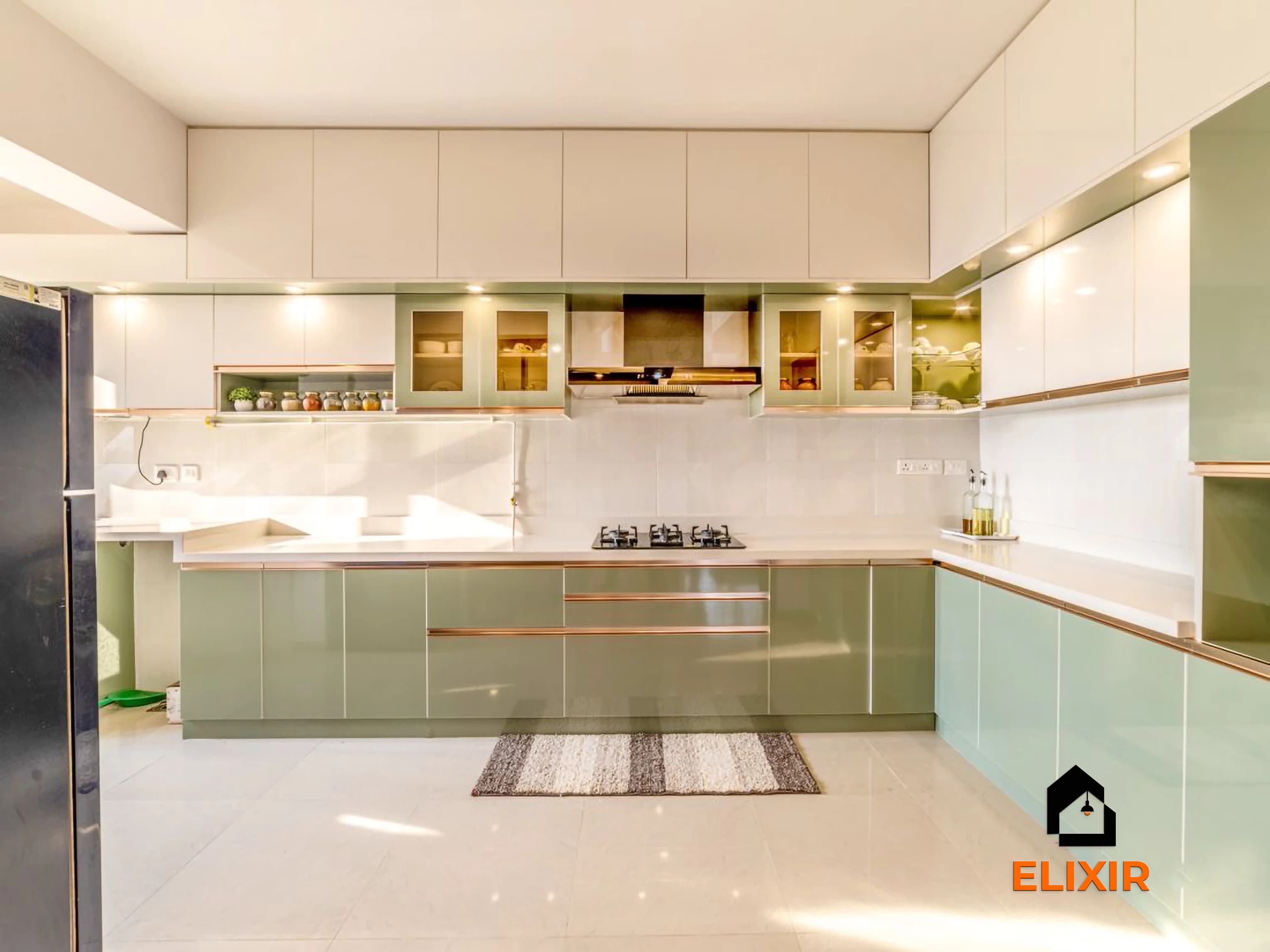
U-shaped modular kitchen with sage and white shutters, profile handles and tall storage
Chennai

03

Membrane and glass shutters

Membrane and glass fill two niches: profiled shutters without paint, and wall units that show off or hide what is inside.

Profiled shutters

Membrane (PVC foil)

Thin PVC foil vacuum-pressed over a routed MDF or HDHMR panel. The easiest way to get shaker or profiled designs without paint, at about the same cost as laminate. The foil wraps the edges, so there is no band.

Wall units and display

Glass in a frame

Glass in an aluminium or wood frame. Frosted or lacquered glass hides clutter; clear glass suits a display. Toughened lacquered glass handles heat and scratches very well but is the most expensive face.

Watch out: Near the hob or a built-in oven, membrane foil can lift over time, so use heat-shield strips or a different finish there. Glass is not a good idea for base units, where knees, trolleys and pressure cookers knock against the edges.

04

What drives the cost of a shutter finish

Finish is usually a smaller share of the total kitchen cost than people expect, because carcasses, hardware and the countertop are fixed costs. Moving from laminate to acrylic on all shutters typically raises the overall kitchen cost by a modest margin, while full PU can raise it more noticeably. Handle-less profiles, curved edges and custom colours add further.

Published rates also vary a lot between sources, partly because some quote the finish alone and others the whole shutter or cabinet. Ask every vendor to quote per square foot of shutter, with the board, finish brand and thickness named, so the numbers are comparable. You can see how finish choices move the total on our modular kitchen cost page.

  • Number of shutters and drawer fronts, not just kitchen length
  • Gloss level and whether both faces need the same finish
  • Handle type: profile, gola channel or knob
  • Custom colours, curved edges and routing
Acrylic
+50–100%
Over laminate, finish only
PU / lacquer
2–3×
Laminate cost, finish only
Membrane
About 1×
Same as laminate, sometimes slightly less
Lacquered glass
3–4×
Laminate cost, finish only

Designer tip: Use laminate for base units, which take the most wear, and a premium finish only for wall units or a tall pantry that faces the living area.

05

What to check on the quote and at delivery

Two shutters with the same finish name can perform very differently. These checks take a few minutes and save arguments later.

Checklist

  • The board under the finish (BWP plywood, HDHMR or MDF) and its thickness, written on the quote
  • Finish brand and range, with the shade code noted so it can be matched later
  • Edge band thickness and colour match, and whether it is machine-applied with PUR or hot-melt glue
  • A balancing laminate or sheet on the inside face of acrylic and laminate shutters
  • For PU, the number of coats and whether the back face is painted too
  • At delivery, shutters checked under daylight for swirl marks, dust in the paint or lifting edges
  • Protective film peeled only after installation

Watch out: Most problems we see come from the board underneath, the edge band and the glue, not the face itself.

06

Mistakes to avoid

The most common regret is choosing high-gloss acrylic for every base unit and then fighting scratches and fingerprints within a year.

Do

  • Use matte or suede laminate on base units that take daily knocks
  • Pick lighter shades in hard-water areas
  • Match edge-band shades when you mix finishes
  • Limit the kitchen to two or three finishes so it looks planned

Avoid

  • Put high-gloss acrylic on every base unit
  • Pick a dark matte shade that shows every water mark in a hard-water area
  • Mix finishes without matching the edge bands, which looks unfinished
  • Use membrane right beside the hob or oven

07

How Elixir helps you choose

Finishes look different in a brochure and in a real kitchen, so we start with full-size samples before anything is ordered.

  1. 1

    Handle the samples

    At the Elixir experience centre in Koyambedu, handle full-size shutter samples in each finish, wipe them and see them under kitchen lighting.

  2. 2

    Free consultation

    We talk through how you cook and clean, and which finish suits each zone.

  3. 3

    Site measurement

    The kitchen is measured and the shutter count fixed.

  4. 4

    Factory production

    Shutters are made in our factory over 15–20 working days along with the carcasses.

  5. 5

    Installation

    The kitchen is installed as one unit under our 12-year woodwork warranty.

Talk to a real designer

Numbers are a starting point. A designer gets you the real one.

Every home is different. A 20-minute conversation with one of our designers usually narrows the range a lot, and often finds savings you wouldn't spot on your own. It's free and there's no obligation.

FAQ

Frequently asked questions

Still unsure? Our designers are happy to answer anything on a call.

Is acrylic better than laminate for a kitchen?

Acrylic looks glossier and richer, but laminate is tougher for daily Indian cooking. Acrylic shows fine scratches if scrubbed and costs roughly 50–100% more, depending on the brand and range. Laminate resists stains, heat and rough cleaning at a lower cost. Many homeowners use laminate on base units and acrylic on wall units to get both durability and a glossy look.

What is the difference between acrylic and PU finish?

Acrylic is a factory-made sheet bonded to the board, so colours come from a fixed range and edges use matching tape. PU is liquid paint sprayed in several coats, so any colour is possible and the edges are seamless or curved. PU can be touched up and repainted, while acrylic is usually polished or replaced. PU generally costs more than acrylic and two to three times laminate.

How much more do acrylic and PU cost than laminate?

Published Indian ranges put acrylic at roughly 50–100% above laminate and PU at about two to three times laminate, for the finish alone. Membrane costs about the same as laminate, and lacquered glass is the most expensive. On a whole kitchen the jump is smaller, because carcasses, hardware and the countertop do not change with the finish.

Which kitchen finish is easiest to maintain?

Matte or textured laminate is the easiest. It hides fingerprints, handles mild detergent and a damp cloth, and resists turmeric and oil stains. Acrylic and high-gloss PU need soft microfibre cloths and no abrasive pads. Glass shows smudges quickly. In hard-water areas, lighter shades show fewer water marks than very dark ones.

Does acrylic fade or turn yellow over time?

Good-quality branded acrylic sheets are made to resist UV and hold colour well indoors. In our experience, cheaper sheets in strong direct sunlight from a west-facing window can fade or yellow slightly over years, and white and pale shades show it most. Ask for a branded sheet and avoid placing acrylic where afternoon sun falls directly.

Is membrane finish good for a Chennai kitchen?

Membrane suits profiled or shaker-style shutters in dry areas such as wall units and a crockery unit. It is the most heat-sensitive finish, so in Chennai heat and steam the foil near the hob or oven can lift at the edges over time. Use heat-shield strips or a laminate or PU shutter beside cooking appliances, and choose a reputable foil.

Can I mix finishes in one kitchen?

Yes, and it is often the smartest choice. A typical mix is matte laminate on base units, gloss acrylic or PU on wall units, and glass on a crockery or display cabinet. Keep colours and edge-band shades coordinated and limit the palette to two or three finishes so the kitchen looks planned rather than patched.

Sources and further reading

Facts on this page were checked against these references. Site-specific advice comes from our designers.

  1. Kitchen shutter finishes compared · Asian Paints Beautiful Homes
  2. Acrylic vs laminate for kitchen · NoBroker
  3. HDHMR vs plywood · CenturyPly
  4. BWP plywood vs HDHMR board: durability and water resistance compared · Greenply
  5. IMD confirms northeast monsoon deficit as TN records below normal rainfall this season · DT Next
Free, no-obligation consultation

Start your dream space,
get a free quote?

Not sure which option suits your home? A designer can check it on site and explain the trade-offs.

12 years
Flat warranty
1000+
5.0 Star Ratings
2500+
Projects Completed
Free Consultation
No Hidden Costs
Expert Designers
Call WhatsApp Estimate
Talk to a Designer