Materials decision guide

Plywood vs MDF vs HDHMR: which board suits Chennai homes?

The board inside your cabinets decides how long a kitchen or wardrobe lasts far more than the finish on the outside. In Chennai, the air stays humid for most of the year and the northeast monsoon (October to December) brings the heaviest rain, so damp walls and leaky plumbing test every cabinet. The wrong board can swell within a few seasons. This guide compares plywood grades, MDF, HDHMR and particle board, what the IS numbers on a sheet actually mean, and what to check when the boards arrive on site.

Updated

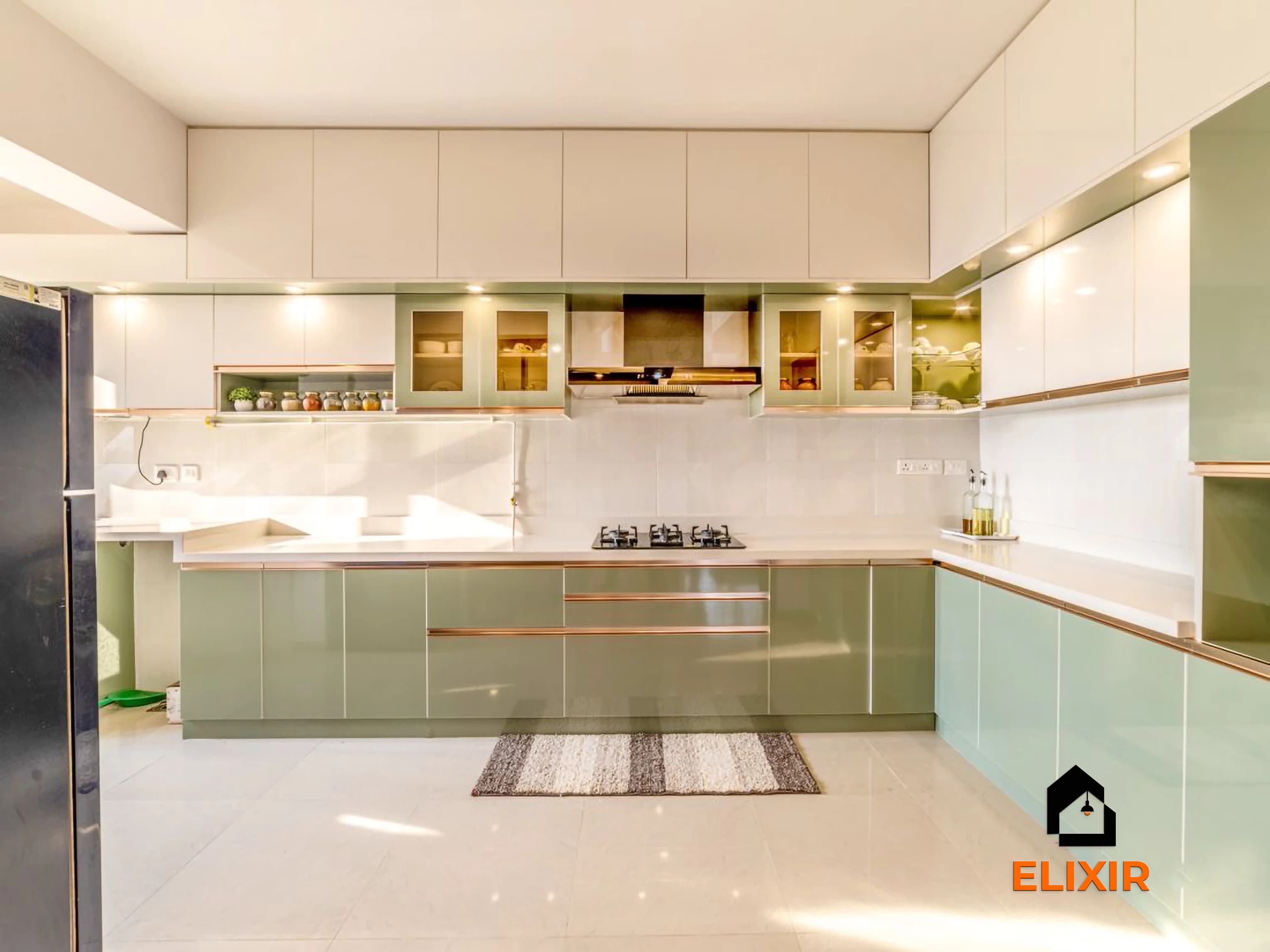
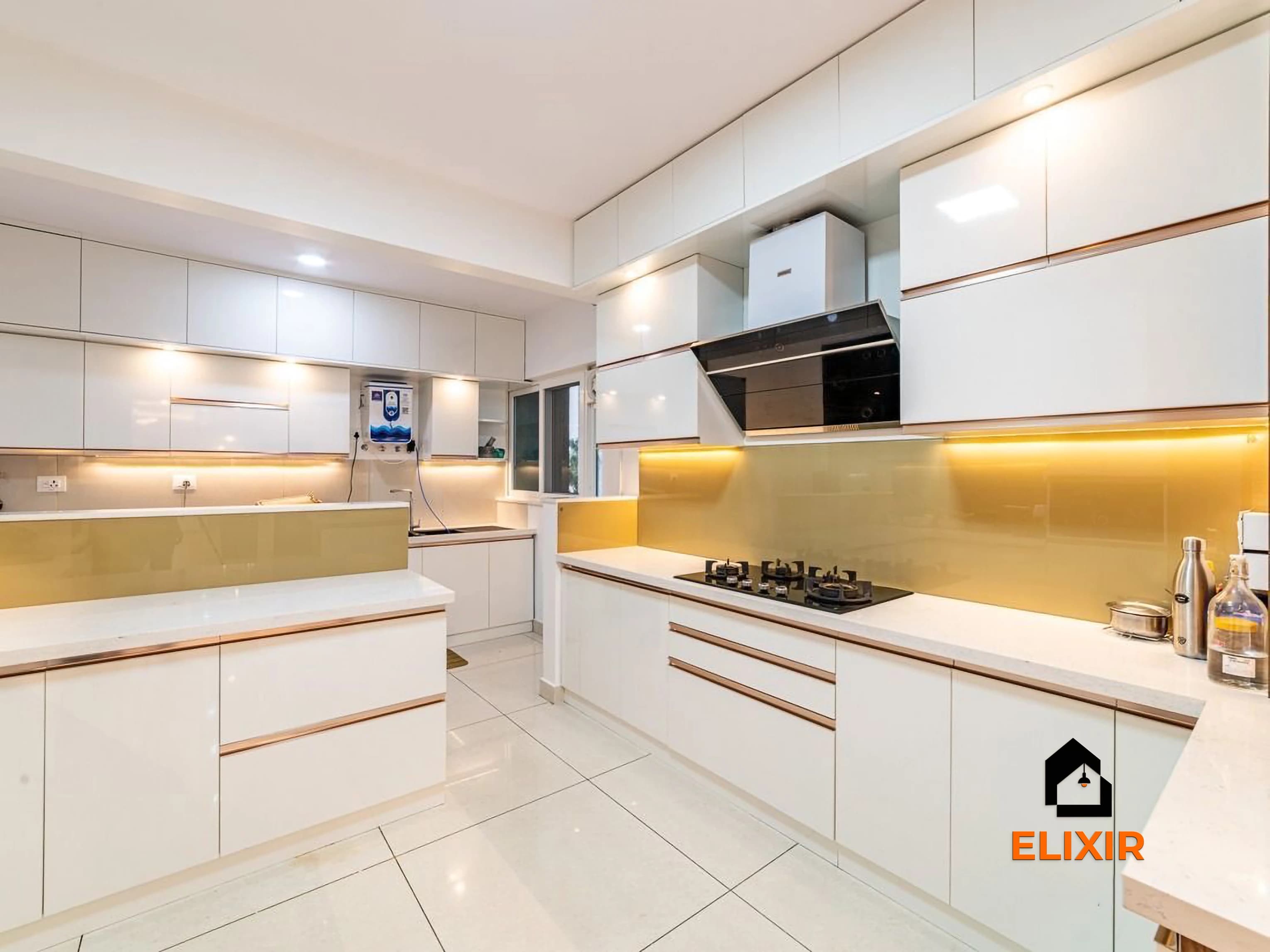
White L-shaped modular kitchen with gold handle profiles, under-cabinet lighting and a chimney, Adyar

An Elixir home in Adyar, Chennai

Quick answer

Which is better for a Chennai kitchen: plywood, MDF or HDHMR?

For sink and hob base units, BWP plywood is the safest choice, with HDHMR a good alternative when every edge is sealed. Use BWR or MR plywood or HDHMR for wall units and wardrobes. Keep MDF for dry interior shutters and decorative panels, and avoid plain particle board anywhere near water in Chennai humidity.

Key takeaways

  • BWP plywood (marine grade under IS 710) handles water best and suits sink, hob and dishwasher base units.
  • MR and BWR plywood are covered by IS 303 and are fine for wall units, wardrobes and dry storage, but not for constant wet zones.
  • HDHMR is much denser than plywood or MDF (manufacturers quote about 850–900 kg/m³), holds screws well and gives flat shutters, but it is moisture resistant, not waterproof, so cut edges must be sealed.
  • MDF works for interior shutters, CNC-routed panels and painted finishes away from water.
  • Particle board is the cheapest option and the least suited to Chennai humidity; keep it to dry, low-load furniture.
  • Check the grade and IS number on every sheet and on the invoice; edge banding, raised legs and termite treatment matter as much as the board type.

The short version

Which should you choose?

Choose this if

BWP or BWR plywood

  • You want the most forgiving board for sink, hob and dishwasher base units
  • Your home is near the coast or has a known damp wall or leaky plumbing history
  • You want carcasses that can be re-screwed or repaired after years of hinge use
  • You prefer a material carpenters and service teams know well

Choose this if

HDHMR board

  • You want flat, warp-free shutters for tall wardrobes and handle-less kitchens
  • You need a moisture-resistant board at a lower cost than BWP plywood
  • Your cabinets will be factory-made with machine edge banding on every edge
  • You want a uniform core that takes acrylic, PU and membrane finishes cleanly

Choose this if

MDF or particle board

  • The furniture sits in a dry room, away from bathrooms, sinks and external walls
  • You need routed or painted decorative panels and shutters with no visible grain
  • Budget is the main concern and the piece is light-duty or temporary

Plywood, HDHMR, MDF and particle board at a glance

Approximate comparison for kitchen and wardrobe carcasses and shutters in a Chennai apartment.

FactorBWP / BWR plywoodHDHMRMDFParticle board
Standard to look forIS 710 (marine BWP); IS 303 (MR, BWR and an interior BWP grade)No common IS grade name; ask for the maker's density and swelling figuresIS 12406 (density 600–900 kg/m³)IS 12823 for pre-laminated board
Typical densityAbout 500–650 kg/m³About 850–900 kg/m³About 700–720 kg/m³ for 18 mm interior gradeVaries by grade; ask the supplier
Relative costHighest; BWP typically 20–40% above BWR, and MR the cheapestBelow BWP; one maker's 18 mm price bands put it roughly 20–30% lowerLower than HDHMRLowest
Moisture resistanceBWP is very good; BWR good; MR fairGood when every edge is sealed; resistant, not waterproofPoor; swells when wetPoor; crumbles at wet edges
Best use in a kitchenSink, hob and dishwasher base unitsBase and wall carcasses, shuttersDry-area shutters onlyNot recommended
Best use in a wardrobeCarcass and lofts, especially on external wallsCarcass and tall shuttersPainted or routed shuttersBudget internal shelves
Screw holdingVery good, including on edgesGood across the face; use proper hinge platesFair on faces, weak on edgesWeak; screws loosen with use
Flatness of tall shuttersIn our experience can bow over 7 ft without a stiffenerVery flatFlatFlat but heavy and brittle
Termite and borer riskLow with factory-treated sheets; check the treatment on the sheetLow; makers state built-in termite resistanceModerate if untreatedModerate if untreated
Finish optionsLaminate, veneer, acrylicLaminate, acrylic, PU, membranePU, membrane, laminateMostly pre-laminated
RepairabilityEasy to re-drill and patchModerate; repairs need careHard once swollenUsually replaced, not repaired
Typical lifespan in ChennaiLongest in wet zonesLong in dry and semi-wet zonesModerate, dry rooms onlyShortest

Costs are relative and vary by brand, city and thickness. Density figures are manufacturer and supplier figures, not test results for every brand. Lifespans assume edge-banded panels, proper ventilation and no long-term leaks.

01

MR, BWR and BWP plywood: what the grades mean

Plywood is made from thin wood veneers glued in alternating directions. The grade tells you how the glue behaves with water. Marine-grade BWP is made to the stricter IS 710, and a recent amendment also brought an interior BWP grade into IS 303, so you may see BWP sheets carrying either number.

Price follows the grade. That is why many Chennai homes use BWP only for the sink, hob and utility base units, BWR or MR for the rest of the kitchen, and MR for wardrobes in bedrooms that stay dry.

Budget pick

MR plywood (IS 303)

Moisture resistant, made with urea-formaldehyde glue. Handles humid air but not standing water. The cheapest of the three. Use for wardrobes, TV units and dry storage.

Wall units

BWR plywood (IS 303)

Boiling water resistant, made with a stronger resin. Copes with occasional splashes and semi-humid rooms. Use for wall units, lofts and kitchen cabinets away from the sink.

Wet zones

BWP plywood (IS 710 or IS 303)

Boiling water proof, made with phenol-formaldehyde resin; survives repeated wetting. Greenply puts it typically 20–40% above BWR. Use for sink, hob, dishwasher and utility base units.

Watch out: The grade is only as good as the sheet that arrives. Look for the ISI mark and IS number printed on each sheet, make sure the grade is written on the invoice, and check a cut edge: a good sheet has tightly packed veneers with no hollow pockets or overlapping plies.
02

HDHMR and MDF: engineered boards explained

MDF (medium density fibreboard) is made from fine wood fibres pressed with resin. It is smooth, flat and easy to route, which is why it is used for painted and grooved shutters. Its weakness is water: once an unsealed edge swells, it does not recover.

HDHMR (high density high moisture resistance) board is a denser fibreboard pressed with moisture-resistant resin. It holds screws well across the face, stays flat over long spans and handles humid air and steam. CenturyPly describes it as resistant, not waterproof: it is common in factory-made modular kitchens and tall wardrobes, but every cut edge must be sealed, and it is not the board for a cabinet in standing water.

HDHMR density
850–900 kg/m³
Manufacturer figures
Plywood density
500–650 kg/m³
Approximate, for comparison
MDF density
700–720 kg/m³
18 mm interior grade; IS 12406 covers 600–900 kg/m³
MDF swelling
Up to 12%
One supplier's interior grade, 12–19 mm, after 24 hours in water

Designer tip: HDHMR is the engineered board that comes closest to plywood for kitchens, but only when every edge is sealed.

03

Where each board works in a Chennai home

The simplest rule is to match the board to the wettest thing it will face. Wall units, lofts and tall pantry units face steam rather than water. Wardrobes on an external wall, or sharing a wall with a bathroom, often show damp patches during the northeast monsoon, which brings most of Tamil Nadu's rain between October and December.

Homes close to the sea, in areas like Besant Nagar, Thiruvanmiyur or along ECR, also need stainless steel or well-plated hinges and runners, since salt air corrodes cheap hardware faster than it harms the board.

Board by zone

ZoneBoardWhy
Sink, dishwasher and utility baseBWP plywoodFaces water directly
Hob and drawer baseBWP plywood or HDHMREither works if the counter overhang and skirting keep spills off the board
Kitchen wall units, lofts, tall pantryBWR plywood or HDHMRFace steam rather than water
Wardrobe on an external or bathroom wallBWR plywood or HDHMRLeave a small air gap at the back for monsoon damp
Wardrobe on a dry internal wallMR plywood or HDHMR carcassHDHMR or MDF shutters work well
Dry-room shutters and decorative panelsHDHMR or MDFFlat, routable faces away from water

04

Edge banding, termites and moisture

Most board failures in Chennai start at the edges, not the faces. A laminate face keeps water off, but an unsealed edge drinks it up. Factory-made cabinets are banded with PVC or ABS tape on a hot-melt or PUR glue machine, which seals far better than tape pressed on by hand.

Termites and borers are a real risk in older buildings and ground-floor homes. Choose plywood with factory termite treatment, and protect the cabinet in the order below.

Edge band thickness
0.8–2 mm
PVC or ABS, machine-applied
Exposed edges
2 mm
Shutter and drawer-front edges that take knocks
Banded sides
All 4
Including hidden back edges of shelves
Air gap on damp walls
10–20 mm
Behind tall units, so moisture escapes
  1. 1

    Treat walls and floor

    Apply anti-termite treatment to walls and floors before installation.

  2. 2

    Band every panel

    Four-side machine edge banding on every panel before it leaves the factory.

  3. 3

    Raise base units

    Keep base units on adjustable legs, not directly on the floor.

  4. 4

    Fit skirting

    Add aluminium or PVC skirting under sink and utility units.

  5. 5

    Leave a back gap

    Keep a 10–20 mm air gap behind tall units on damp walls instead of letting the back panel soak.

Designer tip: A well-banded HDHMR cabinet often outlasts a poorly sealed plywood one.

05

What to check on the quote and when boards arrive

Ask for the grade, IS number, brand and thickness for each zone of the kitchen and wardrobe, and keep the invoice that lists them. When the sheets or finished cabinets arrive, spend ten minutes checking them before work starts.

Hardware deserves the same attention. Drawer runners are sold in load classes; one major maker rates its concealed runners at 40 kg or 70 kg, tested to EN 15338. Heavy drawers for vessels, pressure cookers and the cylinder should use the higher class.

Checklist

  • ISI mark, IS number and grade printed on each sheet, matching the invoice
  • Thickness measured at a few points: an 18 mm sheet should not be visibly thinner
  • A cut edge with tight, gap-free plies or an even, dense fibre core
  • For HDHMR, the maker's density and swelling figures on the data sheet
  • Edge banding on all four sides, with no lifting at corners
  • Drawer runner load class for heavy drawers, and stainless or well-plated hardware near the coast

Watch out: A quote that says only "plywood" or "waterproof board" leaves room for substitution.

06

Mistakes to avoid

Most board regrets come from saving money in the wrong place. The list below covers the ones we see most often in Chennai kitchens and wardrobes.

Do

  • Match the board to each zone instead of using one board everywhere
  • Buy branded plywood with the IS marking printed on the sheet
  • Use 18 mm board for carcasses and shelves, and 6–8 mm for drawer bottoms and backs
  • Keep the sink base in BWP plywood

Avoid

  • Use one board everywhere just to save money
  • Accept unbranded plywood without an IS marking
  • Fit particle board under the sink because it came pre-laminated
  • Choose 12 mm board for wardrobe shelves longer than about 3 ft; in our experience they tend to sag under folded clothes

07

How Elixir specifies boards

At Elixir, we specify boards zone by zone in the quote, so you can see where BWP, BWR or HDHMR is used and what each costs. You can compare board options on the modular kitchen and wardrobe cost pages before you decide.

  1. 1

    Free consultation

    We discuss how you use the kitchen or wardrobe and which walls are damp or external.

  2. 2

    Site measurement

    The space is measured and wet zones are marked.

  3. 3

    Zone-wise quote

    Board grade, brand and thickness are listed for each zone, with the cost of each.

  4. 4

    Factory production

    Cabinets are made in our factory over 15–20 working days with machine edge banding.

  5. 5

    Installation

    Finished cabinets are installed on site.

Talk to a real designer

Numbers are a starting point. A designer gets you the real one.

Every home is different. A 20-minute conversation with one of our designers usually narrows the range a lot, and often finds savings you wouldn't spot on your own. It's free and there's no obligation.

FAQ

Frequently asked questions

Still unsure? Our designers are happy to answer anything on a call.

Is HDHMR better than plywood?

Not across the board. HDHMR is flatter, denser, more uniform and usually cheaper than BWP plywood, so it is excellent for shutters and dry or semi-wet carcasses. It is moisture resistant rather than waterproof, so BWP plywood still handles standing water and repeated wetting better, which is why it remains the safer choice under the sink and in utility areas in Chennai homes.

What is the difference between BWP and BWR plywood?

BWP (boiling water proof) uses phenol-formaldehyde resin and tolerates repeated soaking without the plies separating; marine-grade BWP is made to IS 710. BWR (boiling water resistant) is an IS 303 grade that handles splashes and humid air but not constant wetting. BWP typically costs 20–40% more, so many homes use it only for sink and utility base units and BWR elsewhere.

Why do some BWP sheets say IS 303 and others IS 710?

IS 710 is the standard for marine plywood, the strictest water-proof grade. IS 303 is the general-purpose plywood standard; it covered MR and BWR grades and was later amended to include an interior BWP grade. Both can be good for a kitchen. What matters is that the grade and IS number are printed on the sheet, the ISI mark is present and the invoice matches.

Can MDF be used for a modular kitchen?

Only in limited places. MDF swells quickly if water reaches an unsealed edge, so it is risky for base units in a Chennai kitchen. It can work for wall-unit shutters or painted decorative panels away from the sink, provided every edge is sealed. HDHMR is usually the better engineered board for kitchens.

What is the best material for modular kitchen cabinets in Chennai?

A mix works best. Use BWP plywood for sink and utility base units, BWP or HDHMR for the hob and drawer units, and BWR plywood or HDHMR for wall units and lofts. Add four-side edge banding, base legs with skirting and a quality finish. This balances moisture protection with a sensible budget.

How do I protect wardrobes from termites in Chennai?

Use termite-treated plywood or resin-bonded HDHMR, treat walls and floors with an anti-termite solution before installation, and avoid placing carcasses directly on the floor. Keep a small air gap behind wardrobes on damp walls and check for leaks from adjacent bathrooms. Inspect the bottom panels once a year, especially after the October to December monsoon.

Is particle board ever a good choice?

Particle board suits light-duty, dry-room furniture such as a study table or temporary storage in a rented home. It has weak screw holding and crumbles once water reaches an edge, so it is a poor fit for kitchens, bathroom vanities or wardrobes on damp walls in Chennai. Use HDHMR if you want a budget engineered board.

Free, no-obligation consultation

Start your dream space,
get a free quote?

Not sure which option suits your home? A designer can check it on site and explain the trade-offs.

12 years
Flat warranty
1000+
5.0 Star Ratings
2500+
Projects Completed
Free Consultation
No Hidden Costs
Expert Designers
Call WhatsApp Estimate
Talk to a Designer